

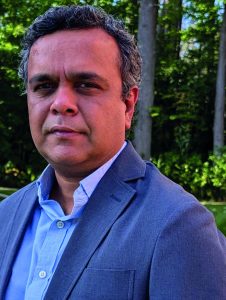
Prasad Kulkarni, manager of body structures engineering at Mahindra Automotive North America, discusses current disrupters in the vehicle testing sphere
For 2026, Mahindra Automotive North America’s manager of body structures engineering, Prasad Kulkarni, joined the ATTI Awards panel at Automotive Testing Expo Europe bringing his unique insight to the voting process. He has spent 26 years in body-in-white engineering, starting with pencil sketches on drafting boards, evolving through the full digital transformation to today’s AI-augmented workflows. Here he explains what makes for a superior awards contender, his current pain points, the next wave of testing developments, and more.
Please tell us a little about your career background and how it has informed where you are today.
My journey has taken me through the entire validation spectrum: from the early days of physical crash sled tests and hammer-impact NVH evaluations, to today’s complex battery protection testing for EVs and multiphysics occupant safety simulations. I’ve lived in CAE environments where pre-processing, solver and post-processing tools became extensions of my engineering intuition.
At Mahindra Automotive North America, I have two parallel focuses. First, optimizing body structure architecture that accommodates multiple powertrains without compromising crash performance or manufacturing efficiency – a challenging but essential strategy as OEMs navigate the transition era. Second, I focus on something I call ‘front-loaded intelligence,’ shifting the point at which testing informs the designer from the end of the development cycle – when changes are expensive and time is limited – to the very beginning, when a well-placed insight costs almost nothing to act on. That gap between where testing currently sits in the development cycle and where it could sit is what drives most of my thinking today.
What is the biggest hardship in your testing field?
The ‘correlation canyon,’ that’s what I call it. For example, we have incredibly sophisticated software that can simulate structural deformation under impact with reasonable accuracy, and equally sophisticated data acquisition systems that capture thermal runaway propagation in physical tests. But the bridge between them, reconciling why the simulation predicted buckling at one timestamp but the physical test
showed it at another, and – more critically – connecting those mechanical predictions to actual thermal outcomes, is still precarious, still largely manual and still devastatingly slow.
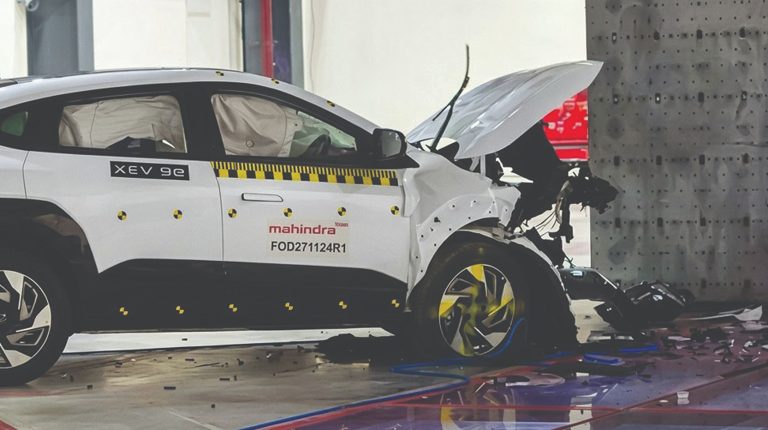
Specifically, we run virtual structural abuse simulations that predict enclosure deformation and intrusion, then execute the physical nail penetration tests. The data exists, both virtual and physical, but extracting meaning requires weeks of manual correlation, filtering noise and chasing down discrepancies. These timing and behavioral gaps represent millions of dollars in design iterations.
The deeper problem is that testing today is fundamentally passive. I specify a test, I run it, I get a pass/fail verdict. What the industry has perfected is data acquisition; what it has not perfected is knowledge extraction. We are data rich but insight poor. Until testing hardware and software are built as a natively correlated ecosystem, where each physical test event automatically updates and refines the simulation model rather than triggering weeks of manual reconciliation, we will keep paying for that canyon in program time and design quality.
What do you think makes a winning awards entry stand out?
In more than two decades in this industry, I’ve seen hundreds of entries showcasing incremental improvements in data acquisition speed or camera resolution. What excites me as a judge is technology
that changes when testing happens in the development cycle, and more importantly, in what direction it looks – testing that faces forward, toward design decisions yet to be made, rather than backward at validation of decisions already frozen.
The standout entries demonstrate three things with real conviction. First, democratization: tools that take complexity out of the specialist’s hands and put predictive capability directly into the designer’s workstation, so structural intelligence is no longer the exclusive domain of CAE teams. Second, closed-loop learning: systems that don’t just collect data and flag failures but automatically feed correlated insights back into simulation models, so every physical test event makes the next virtual prediction more accurate. Third, prescriptive intelligence: systems that don’t just flag failures but generate ranked red to green (R2G) pathways with predicted mass, cost and confidence outcomes.
I also value intellectual honesty above polish. The best submissions openly acknowledge where the technology still has ground to cover. That candor increases credibility with judges who’ve spent time in actual test labs, because we can tell the difference between a field-proven result and an optimized slide deck very quickly. Show me technology that turns testing from a rear-view mirror into a headlight and navigation system combined, and you’ve got my vote.
What developments in testing hardware and software are you most looking forward to seeing over the next couple of years?
I’m watching for the convergence of Gen AI with physics-based testing – what I call ‘predictive co-pilots.’ This space is growing at a pace outstripping almost every other segment in vehicle development technology, and I believe the breakthrough will come from AI systems that don’t just analyze test data but also generate optimized design proposals based on anticipated loading scenarios.
There are two developments I want to see most. The first is intelligent design verification plan (DVP) generators – platforms where I upload my design CAD, specify my vehicle class and target markets, and the system autonomously constructs my entire validation program: which tests, in what sequence, with what acceptance criteria, all optimized for timeline compression and risk mitigation. Not a template pulled from a database, but a bespoke protocol generated by analyzing my specific geometry and architecture.
The second development I’d really like to see is fully realized R2G-enabled testing ecosystems, where testing software doesn’t just return pass/fail but returns a ranked list of design modifications with predicted outcomes. Imagine an output that looks like, Option A: add 1.5mm thickness, mass +1.2kg, pass probability 94%; Option B: change material grade, mass +0.6kg, pass probability 91%; Option C: redesign joint geometry, mass -0.3kg, pass probability 89%.
These two capabilities together could compress DVP cycles from 24 months to 12, fundamentally altering program economics. That is testing as design advisor, not design validator, and it changes everything about how vehicles are developed.
Beyond those two, I’m also keen on multiphysics correlation platforms that unify crash, NVH and durability disciplines automatically, because in the physical world, a battery pack doesn’t care whether it’s experiencing a crash load or a durability load; it just knows it’s under stress. I’m also interested in automated physical-to-virtual calibration using computer vision and digital image correlation: systems that automatically calibrate finite element models from high-speed camera data without human intervention, reducing the correlation cycle from weeks to hours. The through line across all of it: testing must become forward looking and advisory, not backward looking and judgmental.
Do you think testing and validation processes will be a key differentiator for automotive companies over the next decade?
Absolutely – and speaking from the structural engineering perspective, where every platform decision has a direct consequence for safety, weight, cost and time-to-market, testing capability is already the most undervalued competitive variable in vehicle development. When platform architectures converge and powertrain choices narrow across the industry, the company that develops a safer, better-optimized vehicle in less time wins – on cost, timing and product quality simultaneously. The OEMs that recognize testing as a strategic investment rather than a program cost will pull ahead decisively.
In which areas do you see testing having the greatest impact?
Battery safety and structural protection testing: As architectures push toward 800V and higher energy densities, the margin for error in thermal propagation testing vanishes. Prescriptive virtual validation, where AI predicts failure modes across thousands of crash scenarios and can suggest design modifications ensuring compliance while minimizing mass and cost, will separate the leaders from the rest. Virtual validation as a primary evidence source will become increasingly standard, but the winners will be those whose programs deliver an optimization roadmap alongside compliance evidence,
not just a binary approval.
Multiphysics durability and NVH correlation: With EVs, durability isn’t just mechanical anymore; it is thermal-mechanical-vibration coupled. Testing that can accurately predict how a body structure degrades under 15 years of combined road loads, thermal cycling from charging and high-frequency motor vibrations will be critical. The differentiator will be testing technologies that not only compress the DVP timeline but also identify hidden optimization opportunities, spotting that a particular cross-member configuration also improves durability, NVH and crash performance, even though it was only specified for one discipline.
Software-defined structural safety: As vehicles become software defined, the interaction between structural crash performance and active safety systems, pre-tensioning seatbelts, active hood lifters and battery disconnect algorithms becomes hyper-complex.
Testing that can validate the integrated system and co-optimize hardware and software simultaneously: Given this structural response, here’s the optimal restraint firing sequence; and given that sequence, here’s the structural modification that makes it 15% more effective,’ will be the new frontier of occupant protection.
The winners will be those who move testing from the validation phase to the inspiration phase, using predictive technologies to guide and optimize design rather than merely confirm it. That is the future I am working toward as both a judge and a practitioner.