
Close Menu
Automotive Testing Technology InternationalAutomotive Testing Technology International
  • News
    • A-H
      • ADAS & CAVs
      • Aerodynamics
      • Appointments, Partnerships, Investments & Acquisitions
      • Automotive Testing Expo
      • Batteries & Powertrain Testing
      • Component Testing
      • Safety and crash testing
      • Dynamometers
      • EMC & Electronics Testing
      • Emissions & Fuel Consumption
      • Facilities
      • Full-vehicle Testing
    • I-Z
      • Interiors & Infotainment Testing
      • Measurement Tools, Test Systems & Equipment
      • Motorsport
      • NVH & Acoustics
      • Proving Grounds
      • R&D
      • Sensors & Transducers
      • CAE, Simulation & Modeling
      • Software Engineering & SDVs
      • Tire Testing
      • Webinar
  • Features
  • Online Magazines
    • June 2026
    • March 2026
    • November 2025
    • Crash Test Technology – 2025
    • September 2025
    • June 2025
    • Automotive Testing Technology
    • Subscribe to Automotive Testing
    • Crash Test Technology
    • Subscribe to Crash Test Technology
  • Opinion
  • Awards
    • About
    • Eligibility and nomination
    • Get in touch
    • Judges
    • Winner interviews
  • Videos
  • Directories
    • Supplier Spotlight
    • Proving Grounds
  • Webinar
  • Events
LinkedIn Facebook X (Twitter)
  • Automotive Interiors
  • Automotive Powertrain
  • ADAS & Autonomous Vehicle
  • Professional Motorsport
  • Tire Technology
  • Media Pack
LinkedIn
Subscribe
Automotive Testing Technology InternationalAutomotive Testing Technology International
  • News
      • ADAS & CAVs
      • Aerodynamics
      • Appointments, Partnerships, Investments & Acquisitions
      • Automotive Testing Expo
      • Batteries & Powertrain Testing
      • Component Testing
      • Safety and crash testing
      • Dynamometers
      • EMC & Electronics Testing
      • Emissions & Fuel Consumption
      • Facilities
      • Full-vehicle Testing
      • Interiors & Infotainment Testing
      • Measurement Tools, Test Systems & Equipment
      • Motorsport
      • NVH & Acoustics
      • Proving Grounds
      • R&D
      • Sensors & Transducers
      • CAE, Simulation & Modeling
      • Software Engineering & SDVs
      • Tire Testing
      • Webinar
  • Features
  • Online Magazines
    1. June 2026
    2. March 2026
    3. November 2025
    4. Crash Test Technology – 2025
    5. September 2025
    6. June 2025
    7. Automotive Testing Technology
    8. Subscribe to Automotive Testing
    9. Crash Test Technology
    10. Subscribe to Crash Test Technology
    Featured
    June 1, 2026

    In this Issue – June 2026

    Automotive Testing Technology By Web Team
    Recent

    In this Issue – June 2026

    June 1, 2026

    In this Issue – March 2026

    March 25, 2026

    In this Issue – November 2025

    November 27, 2025
  • Opinion
  • Awards
    • About
    • Get in touch
    • Judges
    • Winner interviews
    • ATTI Awards Forum
  • Directories
    • Supplier Spotlight
    • Proving Grounds
  • Webinar
  • Videos
  • Events
LinkedIn
Subscribe
Automotive Testing Technology InternationalAutomotive Testing Technology International
Component Testing

Horiba MIRA urges industry to plan for new UN ALKS regulations

Lawrence ButcherBy Lawrence ButcherJuly 20, 20203 Mins Read
Share LinkedIn Twitter Facebook Email

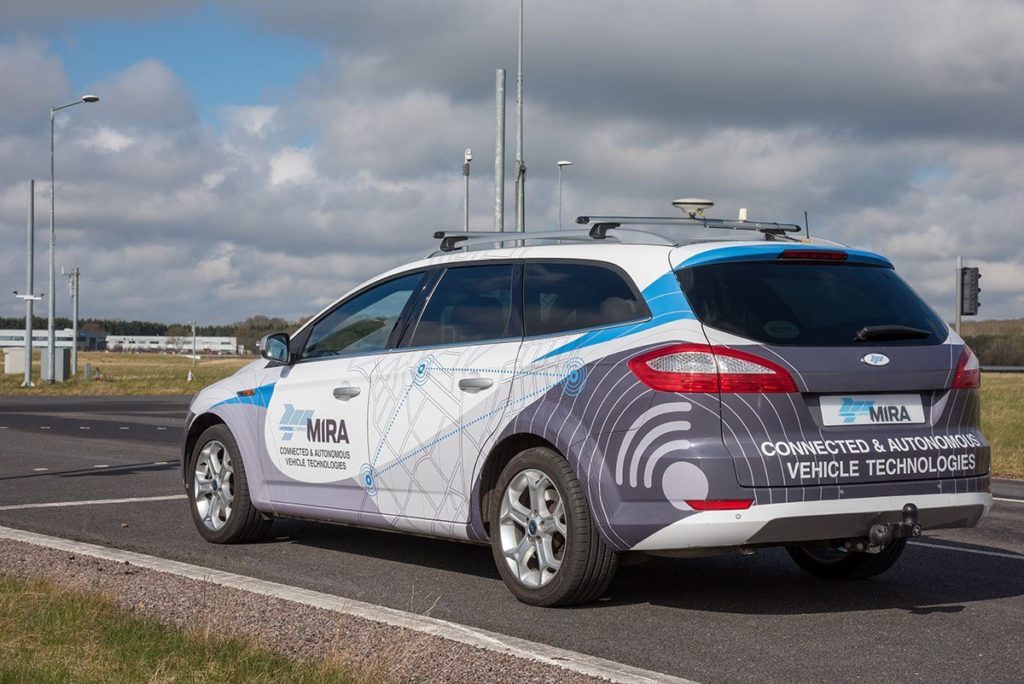
With new UN regulations on automated lane keeping systems (ALKS) coming into force next year, automotive testing specialists Horiba MIRA says that the testing industry needs to adapt to an impending shift to the scenario-based design and test framework that automation technologies require. The regulations are designed to enable the safe introduction of Level 3 automation features in certain traffic environments and will apply to 60 countries including the UK, Japan and European Union member states.

Due to be introduced in January 2021, they set out strict requirements for ALKS in passenger cars, defining safety requirements for a host of scenarios including emergency maneuvers in case of an imminent collision, transition demands when the system asks the driver to take back control, as well as minimum risk maneuvers when the driver does not, in order to protect the safety of the vehicle occupants and other road users.

Welcoming the upcoming changes, Rob Capaldi, commercial manager for connected and autonomous vehicles at Horiba MIRA, said the ALKS regulations create a number of challenges for auto makers, not least a need to ensure safe system behaviours by designing for, and validating, the Safety Of The Intended Functionality (SOTIF) and the potential difficulties in defining and validating minimum risk manoeuvres.

Capaldi commented, “For example, if a vehicle is travelling at 60km/h and it encounters a hazard, the vehicle maker must define and test the safest action available. This requires a fresh perspective as there is not always one single response to emergency maneuvers – and they must ensure the vehicle can automatically react to the situation and make an appropriate decision to control the outcome of the scenario.

“Another core challenge is establishing correct application of SOTIF, which states that situational awareness in all conditions – such as dense traffic or extreme weather – is critical to ensuring safe driving under normal operation in the absence of failure. The SOTIF standards advise on the best practice to guide the design, verification and validation steps to ensure safe operation of the systems under normal operation.”

With this in mind, the company is recommending to the industry that a robust vehicle testing program – centred on scenario-based testing, simulation-based verification and validation and design for SOTIF – is essential to comply with these new regulations.

“With just under six months until the new ALKS regulations come into force, we understand that for many, this will be an area fraught with complexity. There’s no question that compliance calls for a more in-depth design and test program to prove product integrity and show that a vehicle is safe in a variety of different scenarios,” Capaldi added.

“How vehicle manufacturers do this will be dependent upon utilizing scenario-based testing, simulation-based verification and validation and be supported by physical tests to characterize and validate the simulation data.”


Share. Twitter LinkedIn Facebook Email
Previous ArticleAn overview of passive safety systems testing
Next Article Intel’s Mobileye cleared for open road testing in Germany
Lawrence Butcher

Related Posts

Climatic and Environmental Testing

Tested across three continents, Škoda Peaq prepares for launch

June 16, 20262 Mins Read
Side-on promo shot of the Gazoo Racing GRMN Corolla
Aerodynamics

Gazoo Racing unveils GRMN Corolla

June 8, 20264 Mins Read
The Terrastorm 4x4 HD wades through water.
Full-vehicle Testing

Rigorous RAM-D program at military facility validates Torsus Terrastorm 4×4 HD

June 8, 20264 Mins Read
Latest News

Real-world EV test names Xpeng X9 top performer

June 18, 2026
Firefly car with neon blue and red colors, and hot and cold dark background fire.

Transforming temperature control in the automotive industry

June 17, 2026
Visitors intently listen in the ATTI Forum.

Automotive Testing Expo Europe 2026 opens next week with packed content program

June 17, 2026
Free Weekly E-Newsletter

Receive breaking stories and features in your inbox each week, for free


Enter your email address:


Our Social Channels
  • LinkedIn
Getting in Touch
  • Free Weekly E-Newsletter
  • Meet the Editors
  • Contact Us
  • Media Pack
RELATED UKI TITLES
  • Automotive Interiors
  • Automotive Powertrain
  • ADAS & Autonomous Vehicle
  • Professional Motorsport
  • Tire Technology
  • Media Pack
© 2025 UKi Media & Events a division of UKIP Media & Events Ltd
  • Terms and Conditions
  • Privacy Policy
  • Cookie Policy
  • Notice & Takedown Policy
  • Site FAQs

Type above and press Enter to search. Press Esc to cancel.

We use cookies on our website to give you the most relevant experience by remembering your preferences and repeat visits. By clicking “Accept”, you consent to the use of ALL the cookies.
Cookie settingsACCEPT
Manage consent

Privacy Overview

This website uses cookies to improve your experience while you navigate through the website. Out of these, the cookies that are categorized as necessary are stored on your browser as they are essential for the working of basic functionalities of the website. We also use third-party cookies that help us analyze and understand how you use this website. These cookies will be stored in your browser only with your consent. You also have the option to opt-out of these cookies. But opting out of some of these cookies may affect your browsing experience.
Necessary
Always Enabled
Necessary cookies are absolutely essential for the website to function properly. These cookies ensure basic functionalities and security features of the website, anonymously.
CookieDurationDescription
cookielawinfo-checbox-analytics11 monthsThis cookie is set by GDPR Cookie Consent plugin. The cookie is used to store the user consent for the cookies in the category "Analytics".
cookielawinfo-checbox-functional11 monthsThe cookie is set by GDPR cookie consent to record the user consent for the cookies in the category "Functional".
cookielawinfo-checbox-others11 monthsThis cookie is set by GDPR Cookie Consent plugin. The cookie is used to store the user consent for the cookies in the category "Other.
cookielawinfo-checkbox-necessary11 monthsThis cookie is set by GDPR Cookie Consent plugin. The cookies is used to store the user consent for the cookies in the category "Necessary".
cookielawinfo-checkbox-performance11 monthsThis cookie is set by GDPR Cookie Consent plugin. The cookie is used to store the user consent for the cookies in the category "Performance".
viewed_cookie_policy11 monthsThe cookie is set by the GDPR Cookie Consent plugin and is used to store whether or not user has consented to the use of cookies. It does not store any personal data.
SAVE & ACCEPT