

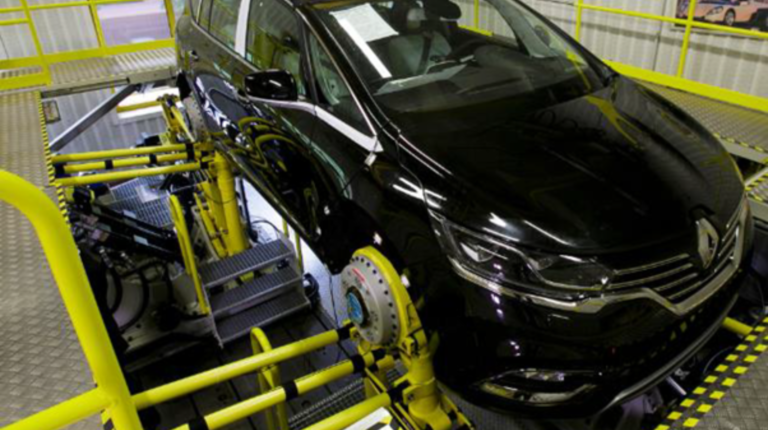
Facing a rapidly evolving industry and ambitious innovation goals, Renault sought to optimize its durability analysis process and implement standardized methods across the organization. To achieve this, it adopted a unified approach to durability testing and simulation by deploying nCode GlyphWorks, supplied by Hottinger Brüel & Kjær, across key departments, which enabled standardized workflows, enhanced team expertise and significant time savings.
Previously relying on multiple fragmented software tools, Renault partnered with Hottinger Brüel & Kjær to deploy nCode GlyphWorks with DesignLife, creating a unified environment for test data analysis and CAE-based durability simulation across engine, body structure and chassis teams.
Jean-Michel Lambert, functional durability expert for personal car equipped body at Renault, summarised, “The migration to nCode GlyphWorks has provided several gains including overall team skills and optimization of processes. This success was also enabled by a strong support structure: massive training sessions, a GlyphWorks user exchange group and dedicated HBK technical support for migrating specific scripts. In addition, particular attention was given to developing and delivering standard scripts that met all user requirements, while encapsulating their complexity and protecting them from misuse. These elements were key to making this large-scale migration a success.”
Related news, Anritsu and Valeo partner on digital twin validation for SDVs