

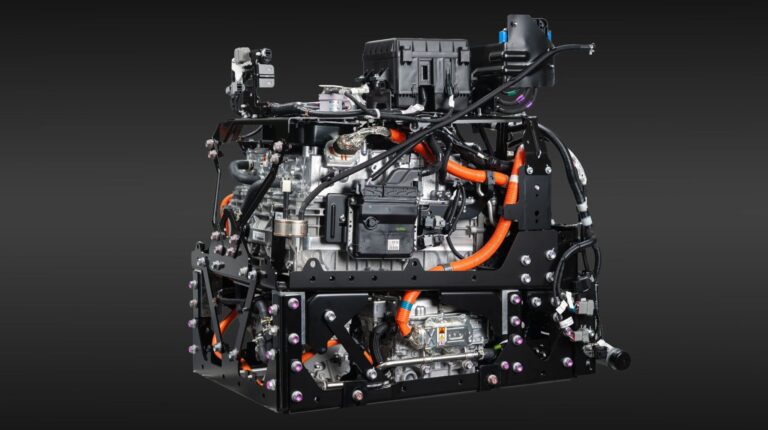
Toyota Hydrogen Solutions has announced that its fuel cells have earned ANSI/CSA FC 1 and ANSI/CSA FC 6 certification.
The certifications validate the specific safety and compliance standards set forth by the American National Standards Institute (ANSI) and CSA Group, a worldwide standards organization based in Canada.
“With our stationary Toyota fuel cell earning ANSI/CSA FC 1 and FC 6 certifications, there’s now a significantly lower barrier to adoption [of stationary power generator applications],” said Thibaut de Barros Conti, vice president of Toyota Hydrogen Solutions. “These rigorous certifications should put customers at ease when it comes time for their businesses to make investments into more environmentally conscious power generation.”
Hydrogen fuel cells provide an alternative to traditional combustion power generation, with potentially lower environmental impact, depending on how the hydrogen is produced. They work by combining gaseous hydrogen and oxygen in an electrochemical process to produce electricity, resulting in only water vapor as exhaust.
Stationary fuel cell power generators are often allowed to operate with fewer restrictions than traditional internal combustion generators, given they create no carbon emissions at the point of use and produce fewer sound emissions. As fuel cells are often allowed to operate without interruption as long as there’s a fuel source, they can help with peak shaving – augmenting the electrical grid – or even serve as a remote power source in areas not connected to a grid, such as disaster response sites or remote facilities.
In related news, Toyota Motor Europe opens digital hub in Wrocław