

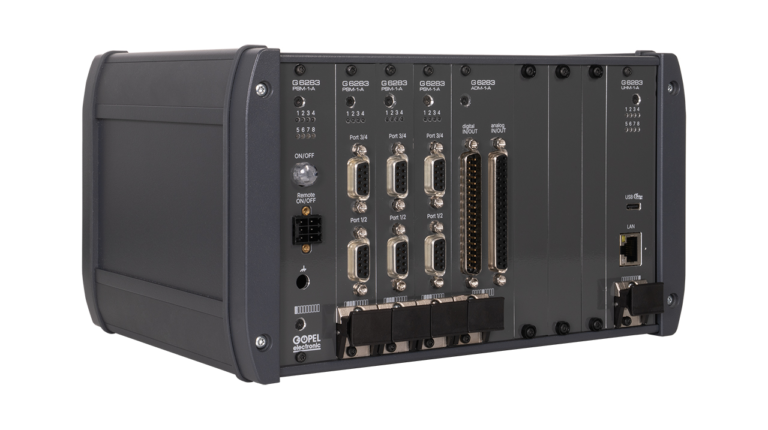
Göpel Electronic’s GCAR 6283 is a standalone test system engineered for parallel testing, simulation and analysis of modern vehicle control units and communication networks. The latest addition to the company’s 62 series features a compact, scalable architecture that supports up to 20 bus interfaces simultaneously, enabling highly efficient, multichannel testing for complex automotive systems.
The GCAR 6283 runs on embedded hardware using the QNX real-time operating system. Unlike traditional interface cards or PC-dependent systems, communication, diagnostic and simulation tasks are executed directly on the hardware. This enables functions such as residual bus simulation, parallel single-ECU testing and high-performance flashing of multiple control units without relying on a host PC.
The company says the system is designed for development environments as well as production, end-of-line (EOL) and run-in testing applications where high levels of parallel testing are required.
The tester is built on a modular backplane architecture that allows flexible configuration through plug-in modules. Supported vehicle communication standards include CAN FD, LIN, FlexRay and automotive ethernet, including 100BASE-T1, 1000BASE-T1 and 10BASE-T1S. Support for CAN XL and multigigabit automotive ethernet is planned as part of future expansions.
In addition to bus interfaces, the system provides a range of digital and analog I/O options for functions such as trigger signals, PWM, SENT and other test tasks. Onboard firmware supports features including end-to-end security functions (checksums and message counters), SecOC, network management and diagnostic protocols, allowing time-critical operations to be processed locally on the hardware.
This architecture enables complex test scenarios such as gateway simulation, parallel flashing operations and advanced residual bus simulations on a single standalone system. For trace data capture, the GCAR 6283 can be expanded with an integrated M.2 SSD.
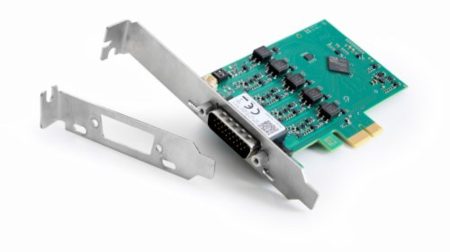
For integration into automated test environments, Göpel Electronic provides a C-based programming interface (G-API) as well as a LabVIEW library. The system connects to a host PC via a pluggable interface card supporting 1Gbit ethernet or 5Gbit USB.
Residual bus simulations can be configured using Göpel’s Net2Run software toolchain, which derives AUTOSAR-compliant configurations from data formats including ARXML, FIBEX and DBC before deploying them to the hardware.