


Close Menu
Automotive Testing Technology InternationalAutomotive Testing Technology International
  • News
    • A-H
      • ADAS & CAVs
      • Aerodynamics
      • Appointments, Partnerships, Investments & Acquisitions
      • Automotive Testing Expo
      • Batteries & Powertrain Testing
      • Component Testing
      • Safety and crash testing
      • Dynamometers
      • EMC & Electronics Testing
      • Emissions & Fuel Consumption
      • Facilities
      • Full-vehicle Testing
    • I-Z
      • Interiors & Infotainment Testing
      • Measurement Tools, Test Systems & Equipment
      • Motorsport
      • NVH & Acoustics
      • Proving Grounds
      • R&D
      • Sensors & Transducers
      • CAE, Simulation & Modeling
      • Software Engineering & SDVs
      • Tire Testing
  • Features
  • Online Magazines
    • March 2026
    • November 2025
    • Crash Test Technology – 2025
    • September 2025
    • June 2025
    • Automotive Testing Technology
    • Subscribe to Automotive Testing
    • Crash Test Technology
    • Subscribe to Crash Test Technology
  • Opinion
  • Awards
    • About
    • What’s new and key dates
    • Eligibility and nomination
    • Get in touch
    • Judges
    • Winner interviews
  • Videos
  • Supplier Spotlight
  • Proving Grounds
  • Events
LinkedIn Facebook X (Twitter)
  • Automotive Interiors
  • Automotive Powertrain
  • ADAS & Autonomous Vehicle
  • Professional Motorsport
  • Tire Technology
  • Media Pack
LinkedIn
Subscribe
Automotive Testing Technology InternationalAutomotive Testing Technology International
  • News
      • ADAS & CAVs
      • Aerodynamics
      • Appointments, Partnerships, Investments & Acquisitions
      • Automotive Testing Expo
      • Batteries & Powertrain Testing
      • Component Testing
      • Safety and crash testing
      • Dynamometers
      • EMC & Electronics Testing
      • Emissions & Fuel Consumption
      • Facilities
      • Full-vehicle Testing
      • Interiors & Infotainment Testing
      • Measurement Tools, Test Systems & Equipment
      • Motorsport
      • NVH & Acoustics
      • Proving Grounds
      • R&D
      • Sensors & Transducers
      • CAE, Simulation & Modeling
      • Software Engineering & SDVs
      • Tire Testing
  • Features
  • Online Magazines
    1. March 2026
    2. November 2025
    3. Crash Test Technology – 2025
    4. September 2025
    5. June 2025
    6. Automotive Testing Technology
    7. Subscribe to Automotive Testing
    8. Crash Test Technology
    9. Subscribe to Crash Test Technology
    Featured
    November 27, 2025

    In this Issue – November 2025

    Automotive Testing Technology By Web Team
    Recent

    In this Issue – March 2026

    March 25, 2026

    In this Issue – November 2025

    November 27, 2025

    In this Issue – 2025

    October 7, 2025
  • Opinion
  • Awards
    • About
    • What’s new and key dates
    • Eligibility and nomination
    • Get in touch
    • Judges
    • Winner interviews
    • ATTI Awards Forum
  • Videos
  • Supplier Spotlight
  • Proving Grounds
  • Events
LinkedIn
Subscribe
Automotive Testing Technology InternationalAutomotive Testing Technology International
CAE, Simulation & Modeling

Building trust in AI with deterministic engineering

Robert Ter Waarbeek, principal automotive industry manager EMEA, MathWorksBy Robert Ter Waarbeek, principal automotive industry manager EMEA, MathWorksApril 1, 20264 Mins Read
Share LinkedIn Twitter Facebook Email
3D computer-generated software-defined vehicle graphic.

Robert Ter Waarbeek, principal automotive industry manager EMEA at MathWorks, explains how engineers can advance automotive development with AI-enabled model-based design 

Automotive development is evolving as software-defined vehicle programs introduce faster feature cycles and more complex system interactions while meeting strict requirements for safety, reliability and long-term maintainability. Gen AI is now part of engineering workflows. It can help increase development speed, but its non-deterministic behavior, lack of physics awareness and limited traceability make it difficult to apply directly to safety-critical systems. These characteristics make verification, certification and traceability challenging when outputs generated by Gen AI are introduced without constraints.

Model-based design addresses these issues through deterministic execution, executable specifications and physics-based simulation. MathWorks is bringing these strengths together by integrating Gen AI assistance directly into model-based design tooling, enabling engineers to benefit from accelerated workflows while preserving the rigor required for long-term reliability and certification of automotive software.

Simulation as the foundation of trust

Simulation is the foundation of trust in engineering workflows assisted by Gen AI. It provides a controlled environment where system behavior can be verified early and repeatedly. Model‑based design enables closed‑loop simulation within continuous development pipelines, enabling Gen AI‑assisted artifacts to be validated continuously in virtual environments long before software reaches hardware. Closed-loop simulation uncovers defects that emerge only from real‑time interaction between software, hardware and physical dynamics, such as instability, timing issues, saturation and integration errors. Unlike regular software tests that validate code logic in isolation, simulation validates system behavior against requirements under realistic operating conditions, catching safety‑ and performance‑critical issues much earlier.

In leading organizations, ‘shift left’ is not a one-time activity; virtual verification is embedded directly into continuous integration/continuous development (CI/CD) pipelines. Every change triggers automated builds and simulation runs, exercising models against representative scenarios and acceptance criteria. Verification becomes continuous, not episodic.

Scalable development for evolving E/E architectures

Automotive E/E architectures are transitioning from ECU-centric networks to zonal and centralized computing platforms. Software is no longer bound to specific hardware configurations but must now operate reliably across heterogeneous compute targets while remaining portable and scalable, from small controllers to high-performance vehicle computers.

Model-based design supports this requirement by separating system behavior and software intent from hardware implementation. Engineers develop executable models that serve as stable sources of truth. The models can generate production-ready code for a wide range of processors and operating systems, including platforms incorporating AI inference engines and hardware accelerators such as GPUs, DSPs and NPUs. This approach enables the development and validation of AI-enabled functions (e.g. virtual sensors) at the system level, reduces the need to reengineer algorithms for each target, and improves efficiency and consistency across platforms.

Improving collaboration through model-based design

Engineering organizations must transform their collaboration models to keep pace with increased complexity. Integrating simulation, virtualization and automated verification directly into CI/CD workflows supports rapid iteration across software, AI models and hardware acceleration strategies. This model-centric approach helps organizations operate more quickly while preserving robustness, safety and long-term maintainability in the era of software-defined and AI-driven vehicles.

Integrating AI into deterministic engineering workflows

AI is most effective in automotive development when embedded within a deterministic modeling framework. Within model-based design tools, GenAI-generated content is automatically tied to established interfaces, data definitions and architectural constraints. Model Context Protocol (MCP) capabilities empower engineers with AI assistance while preserving the rigor, repeatability and certification readiness.

Long-term maintainability and certification readiness require deterministic behavior, transparent audit trails and verification evidence that accumulates throughout the lifecycle. Model-based design naturally supports these goals by linking requirements, models, test suites and generated code. Continuous simulation produces verification data throughout development rather than only at the end of a program. When artifacts generated by Gen AI follow the same workflows, they inherit this structure. This ensures that productivity gains do not come at the cost of safety, quality or compliance, and that Gen AI can be adopted at scale.

Conclusion

Gen AI and model-based design offer a structured path to accelerate automotive software development while maintaining trust, safety and engineering rigor. Model-based design provides determinism, physics-based validation and traceability. Gen AI adds efficiency and supports faster iteration when integrated within these boundaries.

This combination enables earlier insight into system behavior and deployment across diverse hardware architectures. The model-centric approach ensures consistent collaboration across engineering teams, and promotes reuse and consistency across global programs. Gen AI-enabled model-based design provides a scalable and reliable foundation for developing robust and certifiable automotive systems.

In the September 2024 edition of ATTI, Secondmind’s chief product officer, Morgan Jenkins, discusses the power and limitations of AI

In related news, Agentic AI transforms McLaren Automotive’s entire engineering process

Share. Twitter LinkedIn Facebook Email
Previous ArticleRivian-Volkswagen joint venture completes SDV architecture winter testing
Robert Ter Waarbeek, principal automotive industry manager EMEA, MathWorks

Related Posts

An RV Tech vehicle undergoes winter testing, driving across a snow covered landscape with a low sun in the sky in the distance.
Appointments, Partnerships, Investments & Acquisitions

Rivian-Volkswagen joint venture completes SDV architecture winter testing

March 31, 20263 Mins Read
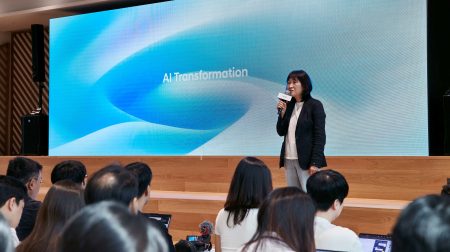
People sit in rows at a technical seminar with a speaker on the stage holding a microphone in front of a large projector screen.
CAE, Simulation & Modeling

Interoperability and cross‑domain collaboration take center stage at ASAM’s Technical Seminar 2026

March 31, 20266 Mins Read
Ansible Motion’s driver-in-the-loop simulator.
CAE, Simulation & Modeling

AVL and Ansible advance vehicle validation with integrated simulation and driver-in-the-loop testing

March 24, 20262 Mins Read
Latest News
3D computer-generated software-defined vehicle graphic.

Building trust in AI with deterministic engineering

April 1, 2026
An RV Tech vehicle undergoes winter testing, driving across a snow covered landscape with a low sun in the sky in the distance.

Rivian-Volkswagen joint venture completes SDV architecture winter testing

March 31, 2026
People sit in rows at a technical seminar with a speaker on the stage holding a microphone in front of a large projector screen.

Interoperability and cross‑domain collaboration take center stage at ASAM’s Technical Seminar 2026

March 31, 2026
Free Weekly E-Newsletter

Receive breaking stories and features in your inbox each week, for free


Enter your email address:


Our Social Channels
  • LinkedIn
Getting in Touch
  • Free Weekly E-Newsletter
  • Meet the Editors
  • Contact Us
  • Media Pack
RELATED UKI TITLES
  • Automotive Interiors
  • Automotive Powertrain
  • ADAS & Autonomous Vehicle
  • Professional Motorsport
  • Tire Technology
  • Media Pack
© 2025 UKi Media & Events a division of UKIP Media & Events Ltd
  • Terms and Conditions
  • Privacy Policy
  • Cookie Policy
  • Notice & Takedown Policy
  • Site FAQs

Type above and press Enter to search. Press Esc to cancel.

We use cookies on our website to give you the most relevant experience by remembering your preferences and repeat visits. By clicking “Accept”, you consent to the use of ALL the cookies.
Cookie settingsACCEPT
Manage consent

Privacy Overview

This website uses cookies to improve your experience while you navigate through the website. Out of these, the cookies that are categorized as necessary are stored on your browser as they are essential for the working of basic functionalities of the website. We also use third-party cookies that help us analyze and understand how you use this website. These cookies will be stored in your browser only with your consent. You also have the option to opt-out of these cookies. But opting out of some of these cookies may affect your browsing experience.
Necessary
Always Enabled
Necessary cookies are absolutely essential for the website to function properly. These cookies ensure basic functionalities and security features of the website, anonymously.
CookieDurationDescription
cookielawinfo-checbox-analytics11 monthsThis cookie is set by GDPR Cookie Consent plugin. The cookie is used to store the user consent for the cookies in the category "Analytics".
cookielawinfo-checbox-functional11 monthsThe cookie is set by GDPR cookie consent to record the user consent for the cookies in the category "Functional".
cookielawinfo-checbox-others11 monthsThis cookie is set by GDPR Cookie Consent plugin. The cookie is used to store the user consent for the cookies in the category "Other.
cookielawinfo-checkbox-necessary11 monthsThis cookie is set by GDPR Cookie Consent plugin. The cookies is used to store the user consent for the cookies in the category "Necessary".
cookielawinfo-checkbox-performance11 monthsThis cookie is set by GDPR Cookie Consent plugin. The cookie is used to store the user consent for the cookies in the category "Performance".
viewed_cookie_policy11 monthsThe cookie is set by the GDPR Cookie Consent plugin and is used to store whether or not user has consented to the use of cookies. It does not store any personal data.
SAVE & ACCEPT