
Close Menu
Automotive Testing Technology InternationalAutomotive Testing Technology International
  • News
    • A-H
      • ADAS & CAVs
      • Aerodynamics
      • Appointments, Partnerships, Investments & Acquisitions
      • Automotive Testing Expo
      • Batteries & Powertrain Testing
      • Component Testing
      • Safety and crash testing
      • Dynamometers
      • EMC & Electronics Testing
      • Emissions & Fuel Consumption
      • Facilities
      • Full-vehicle Testing
    • I-Z
      • Interiors & Infotainment Testing
      • Measurement Tools, Test Systems & Equipment
      • Motorsport
      • NVH & Acoustics
      • Proving Grounds
      • R&D
      • Sensors & Transducers
      • CAE, Simulation & Modeling
      • Software Engineering & SDVs
      • Tire Testing
  • Features
  • Online Magazines
    • March 2026
    • November 2025
    • Crash Test Technology – 2025
    • September 2025
    • June 2025
    • Automotive Testing Technology
    • Subscribe to Automotive Testing
    • Crash Test Technology
    • Subscribe to Crash Test Technology
  • Opinion
  • Awards
    • About
    • What’s new and key dates
    • Eligibility and nomination
    • Get in touch
    • Judges
    • Winner interviews
  • Videos
  • Supplier Spotlight
  • Proving Grounds
  • Events
LinkedIn Facebook X (Twitter)
  • Automotive Interiors
  • Automotive Powertrain
  • ADAS & Autonomous Vehicle
  • Professional Motorsport
  • Tire Technology
  • Media Pack
LinkedIn
Subscribe
Automotive Testing Technology InternationalAutomotive Testing Technology International
  • News
      • ADAS & CAVs
      • Aerodynamics
      • Appointments, Partnerships, Investments & Acquisitions
      • Automotive Testing Expo
      • Batteries & Powertrain Testing
      • Component Testing
      • Safety and crash testing
      • Dynamometers
      • EMC & Electronics Testing
      • Emissions & Fuel Consumption
      • Facilities
      • Full-vehicle Testing
      • Interiors & Infotainment Testing
      • Measurement Tools, Test Systems & Equipment
      • Motorsport
      • NVH & Acoustics
      • Proving Grounds
      • R&D
      • Sensors & Transducers
      • CAE, Simulation & Modeling
      • Software Engineering & SDVs
      • Tire Testing
  • Features
  • Online Magazines
    1. March 2026
    2. November 2025
    3. Crash Test Technology – 2025
    4. September 2025
    5. June 2025
    6. Automotive Testing Technology
    7. Subscribe to Automotive Testing
    8. Crash Test Technology
    9. Subscribe to Crash Test Technology
    Featured
    November 27, 2025

    In this Issue – November 2025

    Automotive Testing Technology By Web Team
    Recent

    In this Issue – March 2026

    March 25, 2026

    In this Issue – November 2025

    November 27, 2025

    In this Issue – 2025

    October 7, 2025
  • Opinion
  • Awards
    • About
    • What’s new and key dates
    • Eligibility and nomination
    • Get in touch
    • Judges
    • Winner interviews
    • ATTI Awards Forum
  • Videos
  • Supplier Spotlight
  • Proving Grounds
  • Events
LinkedIn
Subscribe
Automotive Testing Technology InternationalAutomotive Testing Technology International
Batteries & Powertrain Testing

How the USA’s tech agnosticism could spark novel powertrain strategies

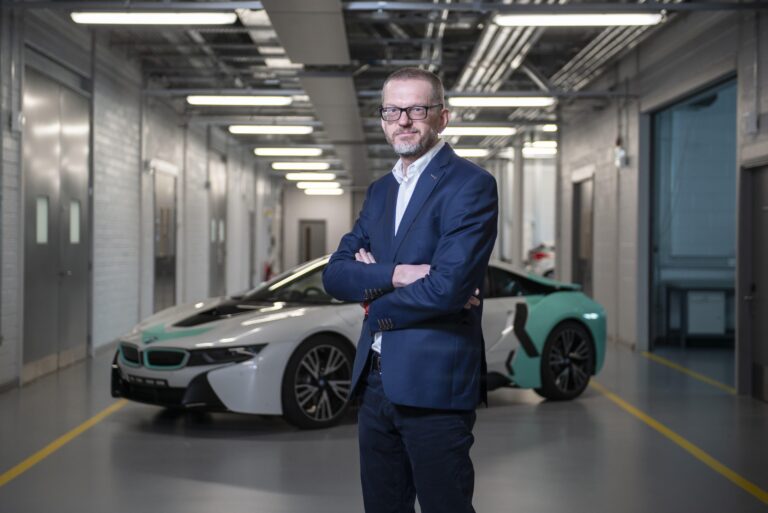
Prof. Chris Brace, executive director, Institute for Advanced Automotive Propulsion Systems (IAAPS), University of BathBy Prof. Chris Brace, executive director, Institute for Advanced Automotive Propulsion Systems (IAAPS), University of BathSeptember 4, 20244 Mins Read
Share LinkedIn Twitter Facebook Email
Prof. Chris Brace, executive director, Institute for Advanced Automotive Propulsion Systems (IAAPS), University of Bath

The USA’s reluctance to commit to one propulsion type has given technology neutrality a major boost – but with the need for alternative powertrain solutions comes the need for better test tools

Why is the US backing away from mandating EVs, which are good for both the industry and the planet? It’s a controversial question that will immediately attract criticism for being naïve about the benefits of BEVs and shielded by an academic’s isolation from the costly realities of a fragmented powertrain strategy. But look beyond the emotions and the USA’s approach is not only a sensible low-carbon strategy but could also ultimately secure the dominance of BEVs.

The challenge faced in the rollout of BEVs is shaped around the transition from the early adopters to the early majority. Those who are excited by the technology and by being in the vanguard of green passenger transportation are willing to overlook many of its current limitations. Those who just want to get around at an affordable price are proving to be less enthusiastic. Nothing will kill the transition faster than customer frustration, whether that is caused by an underdeveloped product, a challenging charging infrastructure, painful depreciation or soaring insurance premiums driven by poor repairability.

What the industry needs is breathing space to tackle these issues – and that’s what the USA has granted us.

There is a lot that we can do at a vehicle level to help overcome these challenges. Let’s start with batteries: they are heavy, very expensive and the supply chains are increasingly affected by rules of origin, for various reasons. Consequently, one of our jobs as research engineers is to minimize the battery capacity needed to achieve the overall vehicle performance goals. Add to that what one might call ‘charging anxiety’, and you have a compelling justification for a new generation of highly efficient, highly integrated hybrids.

It remains to be seen whether they prove to be a bridge to a fully electric future or retain relevance in their own right as fuels are decarbonized. Either outcome is a win if it helps the industry get to a sustainable position more quickly.

At IAAPS, we have always been enthusiastic supporters of a wide range of propulsion options – fully electric, hybrids and renewable-fuel vehicles including both hydrogen fuel cell and hydrogen combustion. This means we have maintained our internal combustion engine research and innovation capability while simultaneously investing in expertise and development resources for electric powertrains.

One exciting possibility is a new generation of hybrids that integrate an efficient, simplified ICE with a larger-than-usual electric drive. The engine can then be right sized for the majority of drive cycles without the need to include complex and costly technologies that would otherwise be required to extend the envelopes of power, torque and dynamic response. This enables us to get closer to the ideal of a single operating point ICE optimized for efficiency. The fuel that this engine will burn is an open question, with hydrogen a strong contender.

Delivering these (and other) low-carbon technologies efficiently will require significant progress in digital tools, especially for system-level decision making and the validation of complex systems with a large number of interactions. The growing focus on price, especially of BEVs, requires new approaches to be assessed and optimized, which requires a robust and highly efficient methodology.

At an individual system level, there is already an impressive range of proprietary tools available, but our work with industry shows that their capability often far exceeds the abilities of embedded processes to use them to deliver the promised savings. The result is a continuing reliance on experimentally intensive development and validation.

In other areas, the digital tools just aren’t good enough yet, either because the experimental data hasn’t been delivered or because the mechanisms are insufficiently understood. Battery modeling is a good example, especially around degradation – an area of research that is being greatly helped by over-the-air data from in-service vehicles.

Similarly with software control, it’s easy to enthuse about the software-defined vehicle but the complexity of validation required to explore the unknown unknowns has caused costly delays in several high-profile vehicle programs.

The much-publicized technology agnosticism of the new US regulations opens exciting new roadmaps for pragmatic powertrain strategies but also brings the challenges of greater technology diversity.

Let’s use this breathing space to take a step back and assess where we need to be and how we can get there as quickly and efficiently as possible. For many vehicle manufacturers, there is substantial competitive advantage waiting to be unleashed.

Share. Twitter LinkedIn Facebook Email
Previous ArticleSubaru installs 5G network at Japanese test track
Next Article Mercedes-AMG PureSpeed enters final stages of testing
Prof. Chris Brace, executive director, Institute for Advanced Automotive Propulsion Systems (IAAPS), University of Bath

Prof. Chris Brace is executive director at the University of Bath’s Institute for Advanced Automotive Propulsion Systems (IAAPS), a UK research and innovation center with expertise across the complete range of powertrains and digital tools

Related Posts

Project Cavendish: Mahle hydrogen-fueled 13-liter engine matches diesel performance.
Fuel Cells

Project Cavendish: Mahle hydrogen-fueled 13-liter engine matches diesel performance

April 23, 20262 Mins Read
Illustration of a vehicle with distributed automotive systems.
Industry Opinion

From code to road: The invisible tools ADAS can’t live without

April 17, 20267 Mins Read
Aerial view of the Toyota Motor Europe Digital Hub in Wrocław, Poland, at night. The building is triangular, and sits on a plot between two major roads.
Facilities

Toyota Motor Europe opens digital hub in Wrocław

April 14, 20262 Mins Read
Latest News
The 2025 Testing Hardware Innovation of the Year trophy.

Shortlist announced for the 2026 Automotive Testing Technology International Awards

April 29, 2026

Interview: Tire development with Apollo Tyres’ Daniele Lorenzetti

April 27, 2026
Project Cavendish: Mahle hydrogen-fueled 13-liter engine matches diesel performance.

Project Cavendish: Mahle hydrogen-fueled 13-liter engine matches diesel performance

April 23, 2026
Free Weekly E-Newsletter

Receive breaking stories and features in your inbox each week, for free


Enter your email address:


Our Social Channels
  • LinkedIn
Getting in Touch
  • Free Weekly E-Newsletter
  • Meet the Editors
  • Contact Us
  • Media Pack
RELATED UKI TITLES
  • Automotive Interiors
  • Automotive Powertrain
  • ADAS & Autonomous Vehicle
  • Professional Motorsport
  • Tire Technology
  • Media Pack
© 2025 UKi Media & Events a division of UKIP Media & Events Ltd
  • Terms and Conditions
  • Privacy Policy
  • Cookie Policy
  • Notice & Takedown Policy
  • Site FAQs

Type above and press Enter to search. Press Esc to cancel.

We use cookies on our website to give you the most relevant experience by remembering your preferences and repeat visits. By clicking “Accept”, you consent to the use of ALL the cookies.
Cookie settingsACCEPT
Manage consent

Privacy Overview

This website uses cookies to improve your experience while you navigate through the website. Out of these, the cookies that are categorized as necessary are stored on your browser as they are essential for the working of basic functionalities of the website. We also use third-party cookies that help us analyze and understand how you use this website. These cookies will be stored in your browser only with your consent. You also have the option to opt-out of these cookies. But opting out of some of these cookies may affect your browsing experience.
Necessary
Always Enabled
Necessary cookies are absolutely essential for the website to function properly. These cookies ensure basic functionalities and security features of the website, anonymously.
CookieDurationDescription
cookielawinfo-checbox-analytics11 monthsThis cookie is set by GDPR Cookie Consent plugin. The cookie is used to store the user consent for the cookies in the category "Analytics".
cookielawinfo-checbox-functional11 monthsThe cookie is set by GDPR cookie consent to record the user consent for the cookies in the category "Functional".
cookielawinfo-checbox-others11 monthsThis cookie is set by GDPR Cookie Consent plugin. The cookie is used to store the user consent for the cookies in the category "Other.
cookielawinfo-checkbox-necessary11 monthsThis cookie is set by GDPR Cookie Consent plugin. The cookies is used to store the user consent for the cookies in the category "Necessary".
cookielawinfo-checkbox-performance11 monthsThis cookie is set by GDPR Cookie Consent plugin. The cookie is used to store the user consent for the cookies in the category "Performance".
viewed_cookie_policy11 monthsThe cookie is set by the GDPR Cookie Consent plugin and is used to store whether or not user has consented to the use of cookies. It does not store any personal data.
SAVE & ACCEPT