

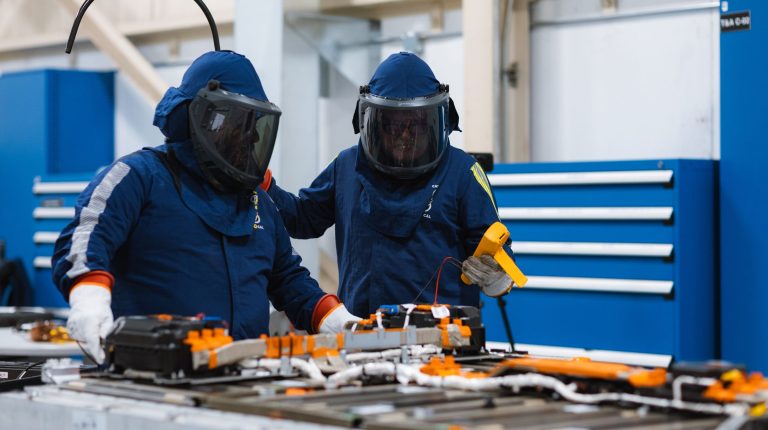
Antonio (Tony) Mancina, director of Canada engineering for Stellantis, discusses the new North America Battery Technology Centre at the Automotive Research and Development Centre (ARDC) in Windsor, Ontario
Stellantis’s North America Battery Technology Centre
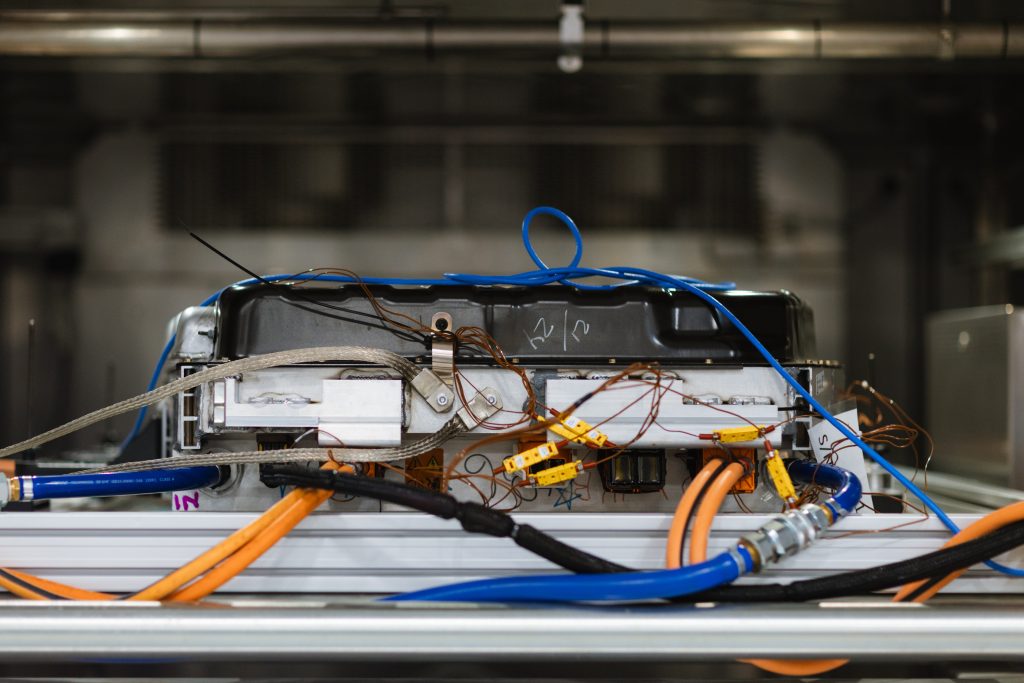
The North America Battery Technology Centre in Windsor, Ontario, is a major new hub for Stellantis’s battery development and validation work across the region. Spanning more than 8,600m2, the facility supports testing of battery cells, modules and packs for battery-electric and hybrid-electric vehicles, helping validate performance, durability, reliability and safety under both normal and extreme operating conditions.
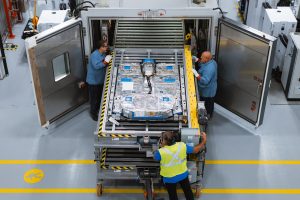
The center includes 35 walk-in climatic test cells capable of supporting up to 63 simultaneous pack tests, along with 11 reach-in test cells that can support up to 132 simultaneous cell tests. Its equipment can test battery pack charge/discharge capability at up to 1,100kW, and cells at up to 3kW, across extreme environmental conditions ranging from -40°C to 65°C, with high-speed temperature ramp rates.
Construction began in late 2023 and was completed at the end of 2025. The facility is expected to create approximately 55 highly qualified engineering and technical positions and is part of Stellantis’ broader US$2.6bn investment, announced in May 2022, to secure the future of its Canadian operations, expand the Automotive Research and Development Centre and accelerate the company’s transition to electrification.
It also complements Stellantis’s global battery development network, including a sister Battery Technology Center in Turin, Italy. The Windsor and Turin facilities have similar testing equipment and capabilities, enabling Stellantis to share valuable data and learnings to support the company’s global engineering network.
What types of projects will the North America BTC undertake for Stellantis?
The facility will support non-destructive validation testing of battery cells, modules and packs, as well as root-cause analysis and engineering investigations related to battery performance and quality. Its work will help validate battery systems throughout the development cycle, improve engineering agility, reduce reliance on external testing resources and protect Stellantis’s internal expertise and intellectual property.
How does the BTC build on Stellantis’s relationship with the University of Windsor and other academic partners?
The Battery Technology Centre builds on the ARDC’s long-standing collaboration with the University of Windsor and other leading Canadian universities, including McMaster University and the University of Waterloo. These partnerships support research into critical industry priorities such as electrification, advanced powertrains and lightweighting. Over the past 30 years, the ARDC has also hosted more than 800 engineering student placements, giving students hands-on industry experience and helping develop the next generation of automotive engineering talent.
How would you describe the current role of the ARDC within Stellantis’s broader R&D ecosystem?
The ARDC in Windsor plays a critical role in Stellantis’s product development work, contributing to engineering and development for nearly every vehicle launched by our North American brands, as well as several global models. The 93,000m2 site is home to approximately 800 employees and includes six road-test simulators, proprietary software development capabilities and a wide range of research and development support facilities that are unique to Stellantis’s North American footprint.
With total research and development investment in Canada now exceeding US$1.4bn, the ARDC remains a key part of Stellantis’s North American engineering footprint. Its work supports vehicle development, strengthens local technical expertise and provides valuable hands-on experience for post-secondary students through co-op placements and advanced research projects that support product development priorities.
Has the ARDC’s focus changed under Stellantis’s new FaSTLAne 2030 strategy?
The ARDC’s work continues to evolve in line with Stellantis’s FaSTLAne 2030 strategic plan, which includes significant growth ambitions through 2030 and expanded market coverage through the launch of 11 all-new vehicles in North America. The Battery Technology Centre is a clear example of that direction, reinforcing Stellantis’s commitment to advancing battery technology and supporting the next generation of electrified vehicles. Our strategy is built around customer choice, affordability and disciplined execution, regardless of technology. As such, the ARDC is equipped with a wide variety of technical capabilities to support the development of a range of products and propulsion systems based on customer demand.
EXPLORE: Are standard heat release combustion models a match for future fuels?