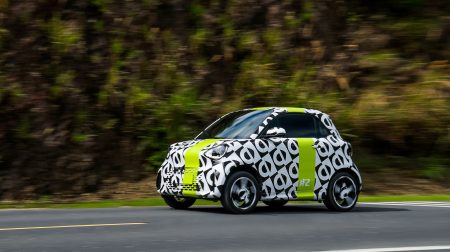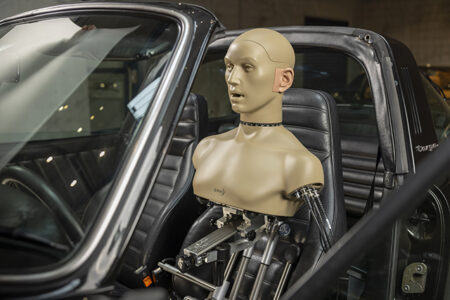


In EVs, the absence of combustion engine noise removes the masking effect associated with petrol and diesel vehicles. Therefore, road, wind and high-frequency component sounds become more noticeable and more critical to overall perceived quality. In response to this challenge, Kia has placed noise, vibration and harshness (NVH) development at the center of the development of its EV2.
“EVs change what customers notice first; without a petrol or diesel engine covering up the background noise, small high-frequency sounds and vibrations stand out immediately,” said Pablo Martínez Masip, vice president, product, brand and customer experience, Kia Europe. “The EV2 behaves calm at higher speed, controlled on rough roads and consistent every day, so the car feels refined from the first kilometer.”
Engineering for silence
From the earliest development stages, the Hyundai Motor Europe Technical Centre (HMETC) used advanced numerical simulations to predict potential issues related to road noise, especially at higher speeds, and design solutions to keep the EV2 quiet and refined in all conditions.
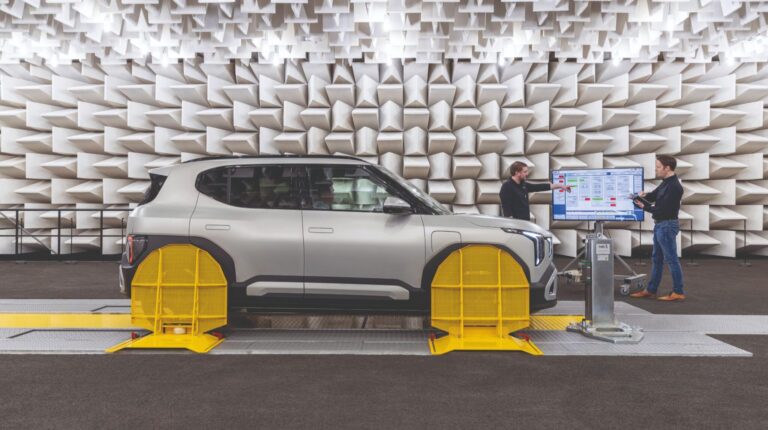
Dyno-based NVH testing enabled precise and repeatable measurements in a controlled environment. This enabled engineers to isolate specific frequencies and implement targeted countermeasures efficiently. This method eliminated external variables, such as changing weather or variable road surfaces.
“We treated the EV2’s NVH development as a system,” said Oliver Jung, lead engineer at HMETC. “Early simulations helped us identify where road and wind noise could disrupt the cabin. Next to that, dyno-based testing gave us repeatable data to validate every countermeasure. Acoustic tires, acoustic glazing and an optimized sound package work together to keep the cabin calm and quiet, even on motorways.”
To reduce road noise, the EV2 is equipped with acoustic tires designed to minimize tonal intrusion. The tires are complemented by specially developed carpets and wheel arch absorbers that lower perceived sound levels. For wind noise reduction, acoustic door glass and an acoustic windshield significantly limit air turbulence noise at highway speeds. This contributes to a stable and reassuring cabin environment.
Although electric motors are quieter than internal combustion engines, EV-specific components, such as the inverter and DC/DC converter, can generate high-frequency tonal sounds. The EV2 addresses this through a dedicated sound package, including a dash inner insulation concept, a frunk absorber and an optimized underbody cover. Together, these elements reduce high-frequency transmission.
Managing EV sounds
Warning sound design in the EV2 also supports safety and usability. The pedestrian warning sound informs other road users while remaining unobtrusive for occupants and the alert sound of the intelligent speed limit assist (ISLA) has been tuned to provide clear guidance without becoming intrusive over time.
Related news, BMW puts Neue Klasse i3 EV through Arctic tests ahead of design premiere