


Close Menu
Automotive Testing Technology InternationalAutomotive Testing Technology International
  • News
    • A-H
      • ADAS & CAVs
      • Aerodynamics
      • Appointments, Partnerships, Investments & Acquisitions
      • Automotive Testing Expo
      • Batteries & Powertrain Testing
      • Component Testing
      • Safety and crash testing
      • Dynamometers
      • EMC & Electronics Testing
      • Emissions & Fuel Consumption
      • Facilities
      • Full-vehicle Testing
    • I-Z
      • Interiors & Infotainment Testing
      • Measurement Tools, Test Systems & Equipment
      • Motorsport
      • NVH & Acoustics
      • Proving Grounds
      • R&D
      • Sensors & Transducers
      • CAE, Simulation & Modeling
      • Software Engineering & SDVs
      • Tire Testing
  • Features
  • Online Magazines
    • November 2025
    • Crash Test Technology – 2025
    • September 2025
    • June 2025
    • March 2025
    • Automotive Testing Technology
    • Subscribe to Automotive Testing
    • Crash Test Technology
    • Subscribe to Crash Test Technology
  • Opinion
  • Awards
    • About
    • What’s new and key dates
    • Eligibility and nomination
    • Get in touch
    • Judges
    • Winner interviews
  • Videos
  • Supplier Spotlight
  • Proving Grounds
  • Events
LinkedIn Facebook X (Twitter)
  • Automotive Interiors
  • Automotive Powertrain
  • ADAS & Autonomous Vehicle
  • Professional Motorsport
  • Tire Technology
  • Media Pack
LinkedIn
Subscribe
Automotive Testing Technology InternationalAutomotive Testing Technology International
  • News
      • ADAS & CAVs
      • Aerodynamics
      • Appointments, Partnerships, Investments & Acquisitions
      • Automotive Testing Expo
      • Batteries & Powertrain Testing
      • Component Testing
      • Safety and crash testing
      • Dynamometers
      • EMC & Electronics Testing
      • Emissions & Fuel Consumption
      • Facilities
      • Full-vehicle Testing
      • Interiors & Infotainment Testing
      • Measurement Tools, Test Systems & Equipment
      • Motorsport
      • NVH & Acoustics
      • Proving Grounds
      • R&D
      • Sensors & Transducers
      • CAE, Simulation & Modeling
      • Software Engineering & SDVs
      • Tire Testing
  • Features
  • Online Magazines
    1. November 2025
    2. Crash Test Technology – 2025
    3. September 2025
    4. June 2025
    5. March 2025
    6. Automotive Testing Technology
    7. Subscribe to Automotive Testing
    8. Crash Test Technology
    9. Subscribe to Crash Test Technology
    Featured
    November 27, 2025

    In this Issue – November 2025

    Automotive Testing Technology By Web Team
    Recent

    In this Issue – November 2025

    November 27, 2025

    In this Issue – 2025

    October 7, 2025

    In this Issue – September 2025

    September 5, 2025
  • Opinion
  • Awards
    • About
    • What’s new and key dates
    • Eligibility and nomination
    • Get in touch
    • Judges
    • Winner interviews
    • ATTI Awards Forum
  • Videos
  • Supplier Spotlight
  • Proving Grounds
  • Events
LinkedIn
Subscribe
Automotive Testing Technology InternationalAutomotive Testing Technology International
ADAS & CAVs

Perforce report reveals shift toward safety and AI in automotive software engineering

Rachel EvansBy Rachel EvansApril 9, 20253 Mins Read
Share LinkedIn Twitter Facebook Email
Perforce report reveals shift toward safety and AI in automotive software engineering.
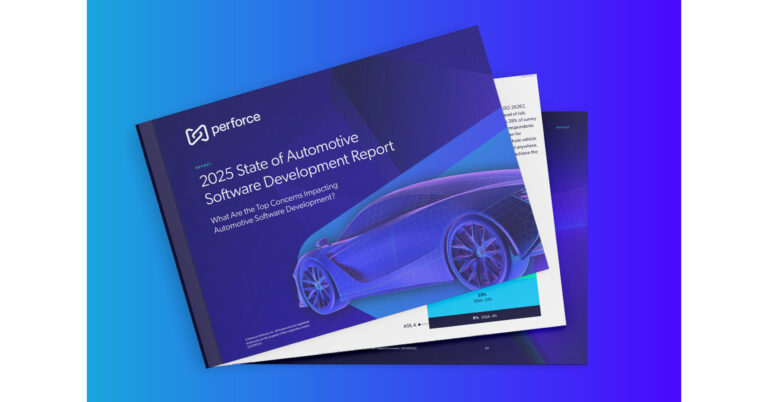
The 2025 State of Automotive Software Development Report from Perforce.

A new report on automotive software engineering has revealed an increase in the use of AI, ongoing challenges with code complexity and a stronger focus on safety over security.

The research was conducted by Perforce Software, in partnership with Automotive IQ and the Eclipse Foundation, and is discussed in the 2025 State of Automotive Software Development report. The annual survey provides exclusive insights into the current challenges of developing safe and secure automotive software, especially in the context of increasingly connected and autonomous vehicle systems.

In fact, safety was the top concern in AI-driven vehicle development for 49% of respondents. As a result, teams working under functional safety standards must take extra precautions when implementing AI, since its algorithms are often non-deterministic and require specific handling.

“Automotive software development is becoming more dependent on AI systems, but the software must still be developed, deployed and maintained with safety in mind,” said Jill Britton, Perforce’s director of compliance. “AI systems bring additional challenges to achieving functional safety and to provide guidance, new and updated standards are emerging for their use in safety-critical applications.”

The report also reveals that AI is now driving autonomous vehicle design for 42% of automotive professionals, a 9% increase from last year, with 41% of respondents stating that AI is influencing at least some components in connected vehicles. The leading areas of AI/ML application were ADAS, followed by in-vehicle infotainment (IVI) systems and lidar components.

In last year’s report, security had overtaken safety as the top concern. However, with the rapid adoption of AI/ML in the development and design of connected and autonomous vehicles, safety has returned as the higher priority in 2025.

Automotive software professionals are increasingly recognizing that high-quality code is essential for both safety and security. However, the complexity of modern codebases makes maintaining that quality difficult –especially for less experienced engineers.

Among respondents with less than one year of experience, 57% identified code complexity as their top concern; this was 45% for those with one to three years of experience. In contrast, 37% of professionals with more than five years of experience cited limited testing resources as their primary quality challenge.

While broader market conditions – such as the global economy and the need to stay competitive – continue to drive most organizations, the report consistently highlights a focus on maximizing existing resources (49%) and upskilling current talent (42%).

To manage increasingly complex codebases, developers are relying on static analysis tools to ensure compliance with industry standards like MISRA and ISO 21434. The survey also found that 30% of teams are prioritizing software quality improvements by using static analysis, version control and continuous testing tools.

Other notable findings include:
· 86% are using at least one coding standard, which is important for code quality.
· 53% use static analysis/SAST tools.
· 89% are required to track code quality metrics to reduce errors — an increase of 12%.
· EV software development is stabilizing, with 47% working extensively on EV systems.
· AI-driven development is growing, with 71% adopting ISO/DPAS 8800 for AI functional safety assurance.

As regulations continue to evolve, demonstrating compliance with functional safety and security standards is more important than ever. The upcoming release of MISRA C:2025 is expected to affect 53% of automotive developers, emphasizing the growing need for strong software quality and compliance tools.

Download the full 2025 State of Automotive Software Development report here. 

Share. Twitter LinkedIn Facebook Email
Previous ArticleIn this Issue – March 2025
Next Article Battery swelling analysis becomes key tool for Hofer Powertrain
Rachel Evans

Rachel's career in journalism has seen her write for various titles at UKi Media & Events within automotive, tire and marine. Currently editor of ATTI, her favourite aspect of the job is interviewing industry experts, including researchers, scientists, engineers and technicians, and learning more about the groundbreaking technologies and innovations that are shaping the future of transportation.

Related Posts

An off-highway electric vehicle drives up a steep incline.
Electric vehicles

CETIM selects HBK’s Aqira platform to support EV R&D

March 3, 20261 Min Read
3D illustration of a futuristic sports car technology concept with wireframe intersection.
Industry Opinion

“Embedded storage remains a less scrutinized yet highly exposed attack surface” – Bernd Niedermeier, Tuxera

March 3, 20266 Mins Read
A Renault vehicle on a testing platform.
Vehicle Development

Renault deploys nCode GlyphWorks to optimize durability testing and analysis

February 12, 20262 Mins Read
Latest News
Apollo Tyres opens dedicated outdoor tire testing facility in Finland.

Apollo Tyres opens dedicated outdoor tire testing facility in Finland

March 6, 2026
The T.50s Niki Lauda (XP3) track supercar at the Bahrain Circuit. Image: Gordon Murray Automotive

T.50s Niki Lauda supercar cleared for production after GT3 benchmark-beating Bahrain test

March 6, 2026
The inside of the new CamMotive battery testing lab in Cambridge. There are silver metal walls and a long line of grey and red cables.

CamMotive opens high-current battery testing facility in Cambridge

March 3, 2026
Free Weekly E-Newsletter

Receive breaking stories and features in your inbox each week, for free


Enter your email address:


Our Social Channels
  • LinkedIn
Getting in Touch
  • Free Weekly E-Newsletter
  • Meet the Editors
  • Contact Us
  • Media Pack
RELATED UKI TITLES
  • Automotive Interiors
  • Automotive Powertrain
  • ADAS & Autonomous Vehicle
  • Professional Motorsport
  • Tire Technology
  • Media Pack
© 2025 UKi Media & Events a division of UKIP Media & Events Ltd
  • Terms and Conditions
  • Privacy Policy
  • Cookie Policy
  • Notice & Takedown Policy
  • Site FAQs

Type above and press Enter to search. Press Esc to cancel.

We use cookies on our website to give you the most relevant experience by remembering your preferences and repeat visits. By clicking “Accept”, you consent to the use of ALL the cookies.
Cookie settingsACCEPT
Manage consent

Privacy Overview

This website uses cookies to improve your experience while you navigate through the website. Out of these, the cookies that are categorized as necessary are stored on your browser as they are essential for the working of basic functionalities of the website. We also use third-party cookies that help us analyze and understand how you use this website. These cookies will be stored in your browser only with your consent. You also have the option to opt-out of these cookies. But opting out of some of these cookies may affect your browsing experience.
Necessary
Always Enabled
Necessary cookies are absolutely essential for the website to function properly. These cookies ensure basic functionalities and security features of the website, anonymously.
CookieDurationDescription
cookielawinfo-checbox-analytics11 monthsThis cookie is set by GDPR Cookie Consent plugin. The cookie is used to store the user consent for the cookies in the category "Analytics".
cookielawinfo-checbox-functional11 monthsThe cookie is set by GDPR cookie consent to record the user consent for the cookies in the category "Functional".
cookielawinfo-checbox-others11 monthsThis cookie is set by GDPR Cookie Consent plugin. The cookie is used to store the user consent for the cookies in the category "Other.
cookielawinfo-checkbox-necessary11 monthsThis cookie is set by GDPR Cookie Consent plugin. The cookies is used to store the user consent for the cookies in the category "Necessary".
cookielawinfo-checkbox-performance11 monthsThis cookie is set by GDPR Cookie Consent plugin. The cookie is used to store the user consent for the cookies in the category "Performance".
viewed_cookie_policy11 monthsThe cookie is set by the GDPR Cookie Consent plugin and is used to store whether or not user has consented to the use of cookies. It does not store any personal data.
SAVE & ACCEPT