

Vector is expanding its CANoe development and testing environment with new AI and MCP capabilities. These will enable the test solution to “complete workflows via prompts, turning requirements into validated tests in minutes”, the company said.
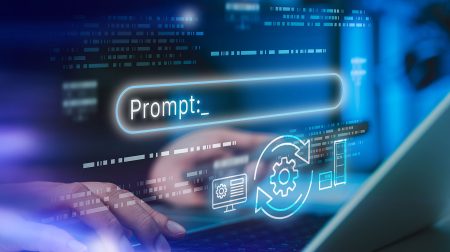
Users can now describe development, analysis, and testing tasks by entering a prompt in natural-language. Specialized AI agents will derive the corresponding steps or complete workflows from these instructions and execute them automatically. The underlying language model is provided by the users themselves, such as the LLM behind GitHub Copilot or Claude. Vector supplies the open AI layer consisting of agents, skills and MCP tools that can be extended with components and domain-specific knowledge.
Version 20 SP2 of CANoe introduces an integrated MCP Server and CANoe AI Package, enabling an AI agent to generate CAPL tests from requirements, execute them, analyze errors, correct the code and rerun the tests. Users can monitor the process in CANoe and control the level of agent autonomy, with tasks that previously took hours or days potentially completed in minutes.
The CANoe AI Package is based on an open ecosystem of AI agents that use skills and MCP tools. With prompts, users can read and customize configurations, control simulations, create tests, analyze communication flows, as well as generate and optimize CAPL, C# and Python code. Through Vector-RAG (retrieval-augmented generation), agents can access a knowledge base containing relevant information from the Vector documentation. As a result, responses are based on verified expert knowledge rather than assumptions generated by the language model. New users gain quick access to CANoe, while experienced users can integrate automated workflows into their environments – ranging from simple queries to fully orchestrated processes.
Recent news, Chery establishes UK R&D center at UTAC Millbrook