


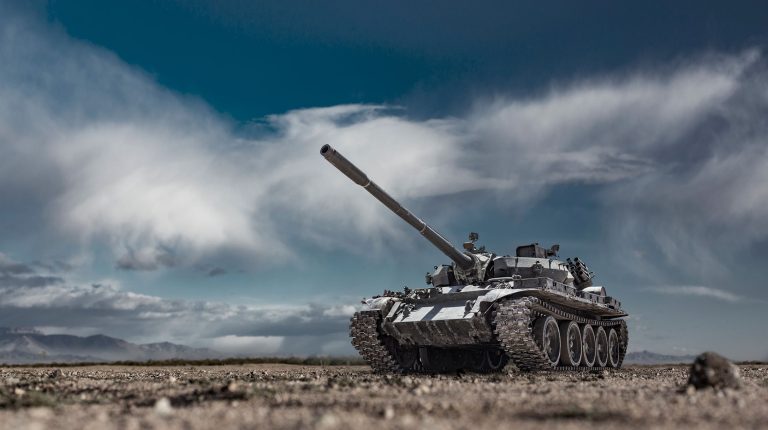
Currently supporting the development of Challenger 3, the British Army’s next-generation main battle tank, the new vibration test facility (VTF) will help engineers test and assure complex defense platforms and systems in the UK, reducing reliance on lengthy physical trials and providing faster, detailed evidence to support engineering decisions.
The VTF will recreate the demanding vibration and movement experienced by military vehicles and equipment in operation. Engineers can use real-world data to reproduce these conditions in a controlled environment, allowing them to assess reliability, identify potential issues and understand how platforms and their systems are likely to perform over extended periods of service.
For Challenger 3, this provides an additional way to understand how the vehicle and its systems respond to demanding operational conditions. The facility complements physical trials, modeling and other engineering analysis, helping build the evidence required to support the reliability and performance of the platform.
The VTF has been designed as a long-term engineering capability rather than supporting a single program. Its scale and flexibility could enable testing of future defense platforms and technologies, as well as applications in automotive.
Capable of accommodating structures and assemblies weighing up to 40 tonnes, the facility can reproduce complex combinations of movement, including vertical motion, pitch and roll. This enables engineers to recreate demanding operating conditions and conduct accelerated durability and reliability testing without relying solely on extended physical trials.
Rob Hunter, vibration test manager at Rheinmetall UK, said, “The VTF gives our engineers a powerful new way to understand complex platforms. We can recreate demanding operational conditions, measure how equipment responds and use that evidence to make better-informed engineering decisions.”
Hunter continued, “Challenger 3 is an important application, but this is a capability we have deliberately designed with the future in mind. Its flexibility means we can adapt it to different engineering challenges, supporting future programs and technologies while retaining critical engineering knowledge and skills here in the UK.”
In recent news, BMW puts new 3 Series through final summer driving dynamics testing