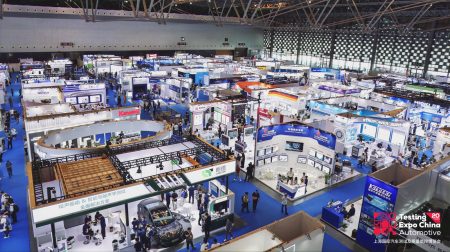


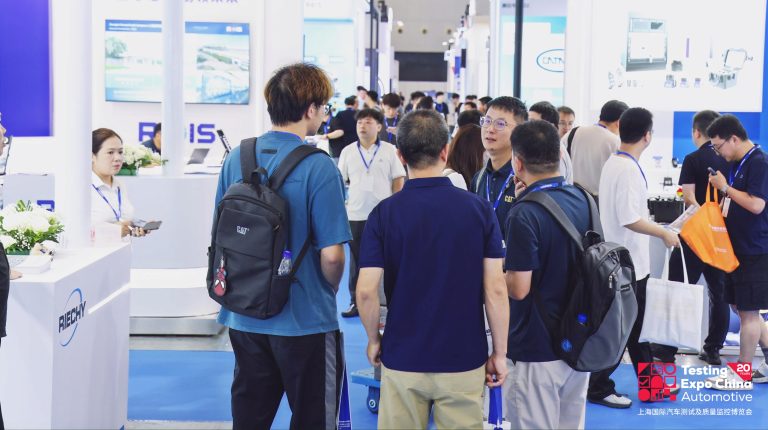
Intelligent vehicles, automation and data-driven testing were among the key themes at this year’s Testing Expo China – Automotive, as the event celebrated its 20th anniversary in Shanghai.
The rapid development of China’s automotive industry was evident across the show floor, with OEMs, Tier 1 suppliers, testing organizations and technology providers exploring how testing and validation need to evolve alongside increasingly electrified, connected and software-defined vehicles.
From intelligent driving and HIL to high-speed data acquisition, power electronics, NVH, emissions and durability testing, the exhibition reflected an industry facing the same fundamental challenge across many markets: how to develop and validate increasingly complex vehicles more quickly while maintaining confidence in the results.
Automation and data reshape vehicle testing
Automation was one clear response to this challenge. AB Dynamics showcased its latest technology for automating durability testing, using driving robots to remove test drivers from harsh proving-ground environments while improving efficiency, accuracy and repeatability.
“By automating the process, we can remove drivers from that harm, but we also get benefits in efficiency because one operator can manage a fleet of vehicles rather than having to be one-to-one vehicle to driver. Driving robots also bring new levels of accuracy and repeatability,” explained the company’s director of track test systems, Andrew Pick.
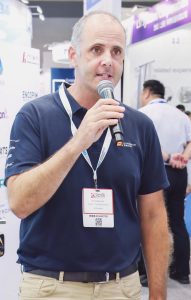
For Pick, the development of testing technology is closely linked to the remarkable evolution of the Chinese automotive market. Having first visited Shanghai in 2007, he has seen the transformation of China’s vehicle technology firsthand. “What we see now on the roads is amazing, with electric vehicles and all of the safety technology that’s on board, and we’re really pleased that as a company we can help support that journey in the testing and development of this new technology.”
The shift toward software-defined vehicles is creating another set of pressures, particularly around testing speed and infrastructure. VCarSystem presented its cloud-based cluster testing solution, designed to standardize customized test environments and allow resources to be managed centrally.
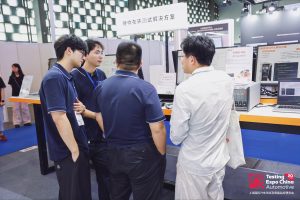
According to the company’s deputy general manager, Zhang Zhongyi, the solution is attracting strong customer interest as software development and vehicle launch cycles accelerate. “The launch cycle of the whole car is also very short. In the testing stage, it takes a lot of time and investment. Our solution can quickly help our customers land their testing plans, ensure the quality of the software and reduce the cost to a relatively low level.”
The growing importance of data and measurement was also visible throughout the exhibition, with suppliers showcasing technologies designed to help engineers collect, synchronize and interpret increasingly complex datasets.
Testing for an increasingly electrified and intelligent vehicle
Electrification continues to reshape requirements across the testing chain, from power electronics and charging to NVH, reliability and safety.
Hioki China, for example, brought its latest measurement equipment to the show, including solutions for high-voltage testing and partial discharge measurement. The company used the exhibition as an opportunity to discuss with existing and new customers the challenges emerging from the development of China’s automotive industry.
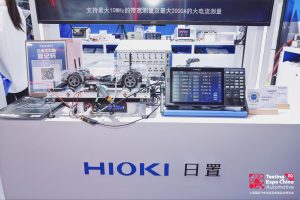 “We look forward to sharing some of the pain points we have encountered in the development of the Chinese automotive industry with our new and old customers, sharing our testing technology to bring more measurement and testing value to our customers,” said Yibin Liu, the director of Hioki Shanghai.
Elsewhere on the show floor, technologies for autonomous driving, ADAS, NVH, vehicle dynamics, emissions and environmental testing demonstrated how broad the testing requirements have become as vehicle architectures continue to evolve.
The Technology Presentation Stage, which ran across all three days for the first time this year, provided another perspective on these developments. Presentations covered intelligent-driving testing, AI-powered validation, simulation, reliability engineering, HIL, XIL, connectivity and future mobility, and the sessions were well attended throughout the event.
China’s testing ecosystem attracts international attention
Although most visitors came from China’s automotive industry, the event also attracted international testing specialists interested in the country’s expanding technology and equipment ecosystem.
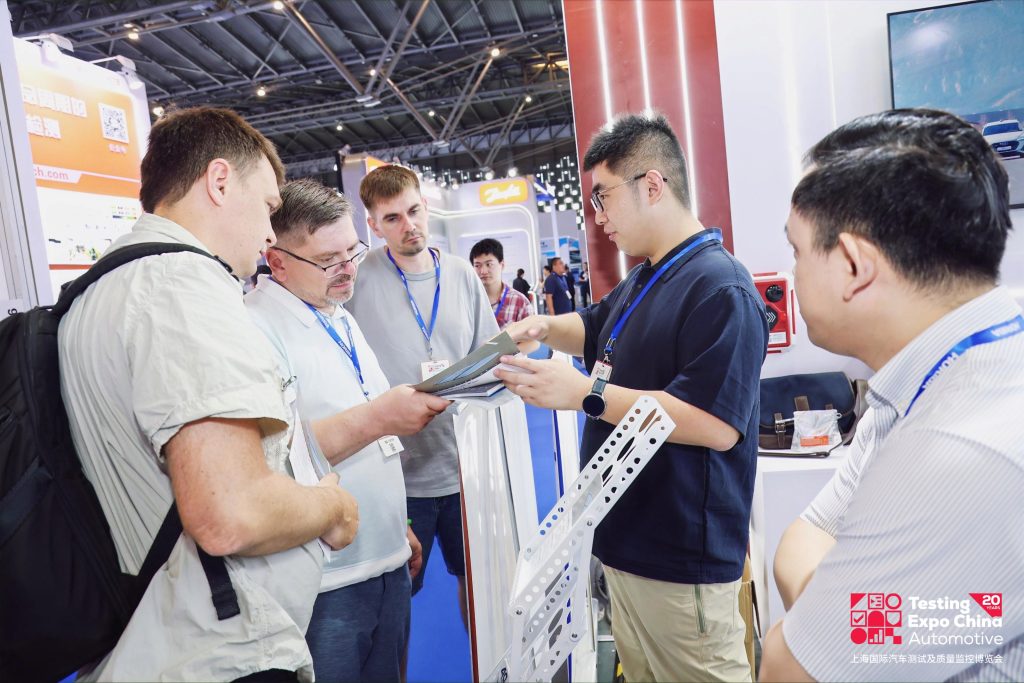
Nailya Diyarova, regional manager at independent testing laboratory Exotest, attended the exhibition for the first time. The company performs automotive testing in markets including France, Russia, India, Brazil and South Korea, and Diyarova came to Shanghai specifically to explore Chinese testing equipment and potential future collaboration.
“I know that China is one of the best at this kind of testing, in simulation tests, and in making equipment. So we are interested in seeing suppliers in China of equipment such as climatic chambers, salt spray chambers, durability testing systems and also simulation test systems,” she said.
Diyarova’s visit reflects the increasing relevance of China’s testing technology supply chain beyond its domestic market, as equipment manufacturers and solution providers continue to develop capabilities for increasingly sophisticated vehicle programs.
Face-to-face connections remain at the heart of the exhibition
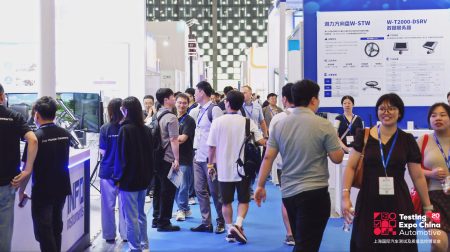
However, technology was only part of the attraction for visitors. The opportunity to meet suppliers, compare solutions and begin conversations for projects beyond the exhibition remained a central value of the event.
Jiawei Dong, an engineer from Beijing Automotive Technology Center, said his team arrived with specific requirements and identified several potential suppliers during the show. “We came here with a purpose. We have found three or four suppliers that we are interested in. We exchanged contact details with some of them and there may be some further discussions after the show, including some of the conversations we started here.”
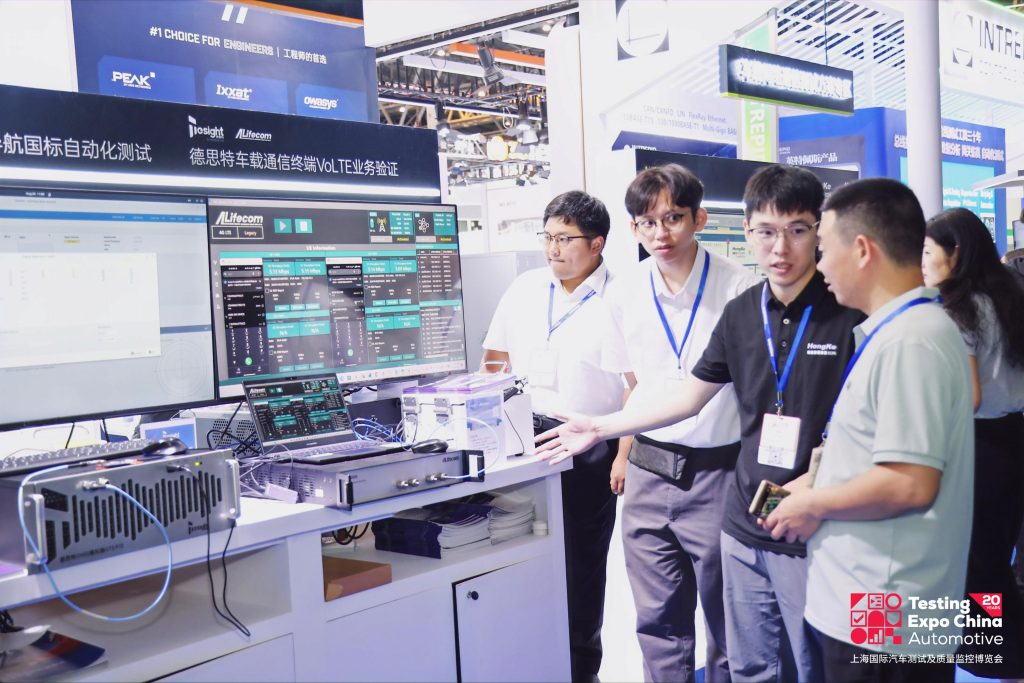
That emphasis on direct engagement was echoed across the show floor, where exhibitors demonstrated equipment and technologies in person, and visitors discussed specific testing requirements directly with technical teams.
Celebrating 20 years
The 2026 event also marked 20 years of Testing Expo China – Automotive.
As part of the anniversary celebrations, 25 exhibitors that have supported the show over the past two decades were recognized with commemorative Longest-Standing Exhibitor awards. Representatives from companies including AB Dynamics, Dewetron, dSPACE, ESPEC, Hongke Technology, Horiba, Keysight, Intrepid Control Systems, Ono Sokki, Oxford Technical Solutions, Vector, Windhill Technologies and ZF Friedrichshafen joined the ceremony and posed for commemorative photographs.
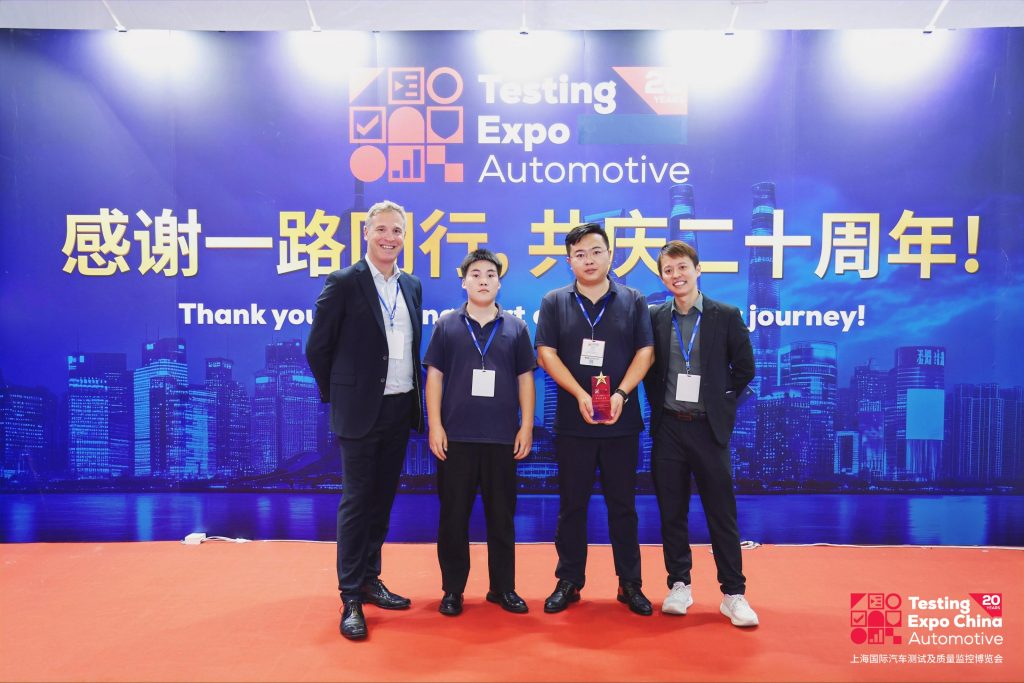
The milestone provided a chance to look back at how much the automotive testing landscape has changed since the first event, while the technologies and conversations across this year’s show demonstrated just how quickly it continues to evolve.
After 20 years, Testing Expo China – Automotive remains a place where the automotive testing community can see new technologies in action, exchange ideas around the industry’s latest challenges and, importantly, meet the people who can help turn those ideas into real-world testing and development solutions.