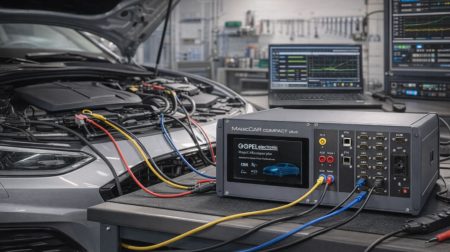


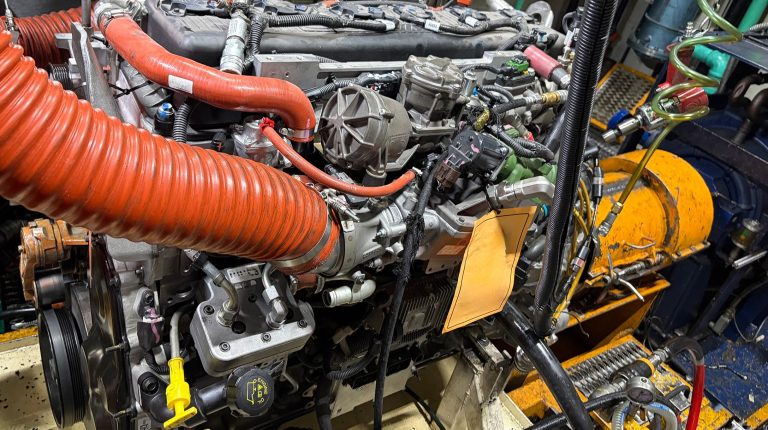
Cortec has researched how its VpCI-649 BD corrosion inhibitor is being used by several diesel engine manufacturers during hot engine testing and storage. Added to the engine cooling system during testing, the product is intended to protect internal components from corrosion caused by residual water. Cortec says it is also being assessed for use in smaller automotive engines with aluminum components
Why protect engines during hot testing and cold storage?
Residual water left after hot engine testing and fill-and-flush operations can contribute to corrosion of internal engine components during storage. According to Cortec, VpCI-649 BD leaves a protective film of vapor-phase corrosion inhibitors that helps protect engine internals, including where residual moisture is present.
A cure for engine corrosion
In May 2023, a major manufacturer of off-road engines began full-scale testing of VpCI-649 BD to address corrosion concerns. The product is reportedly used as a 3% solution in the cooling system during hot testing and as a 5% solution, combined with glycol, for engines stored in cold climates. Eight months into the trial, the engine maker pronounced its corrosion problem cured. Although VpCI-649 BD was initially used to protect the cast iron of very large engine blocks, it is now being considered for smaller engines with aluminum components, such as those in the automotive industry.
In recent news, Applied Intuition launches Dana agentic platform for physical AI