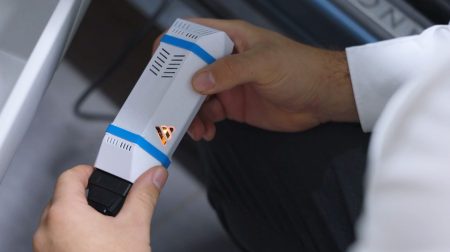



Temperature and flow control technology that uses CO2 as a refrigerant is an environmentally friendly alternative to synthetic refrigerants that is also abundant, safe and non-flammable
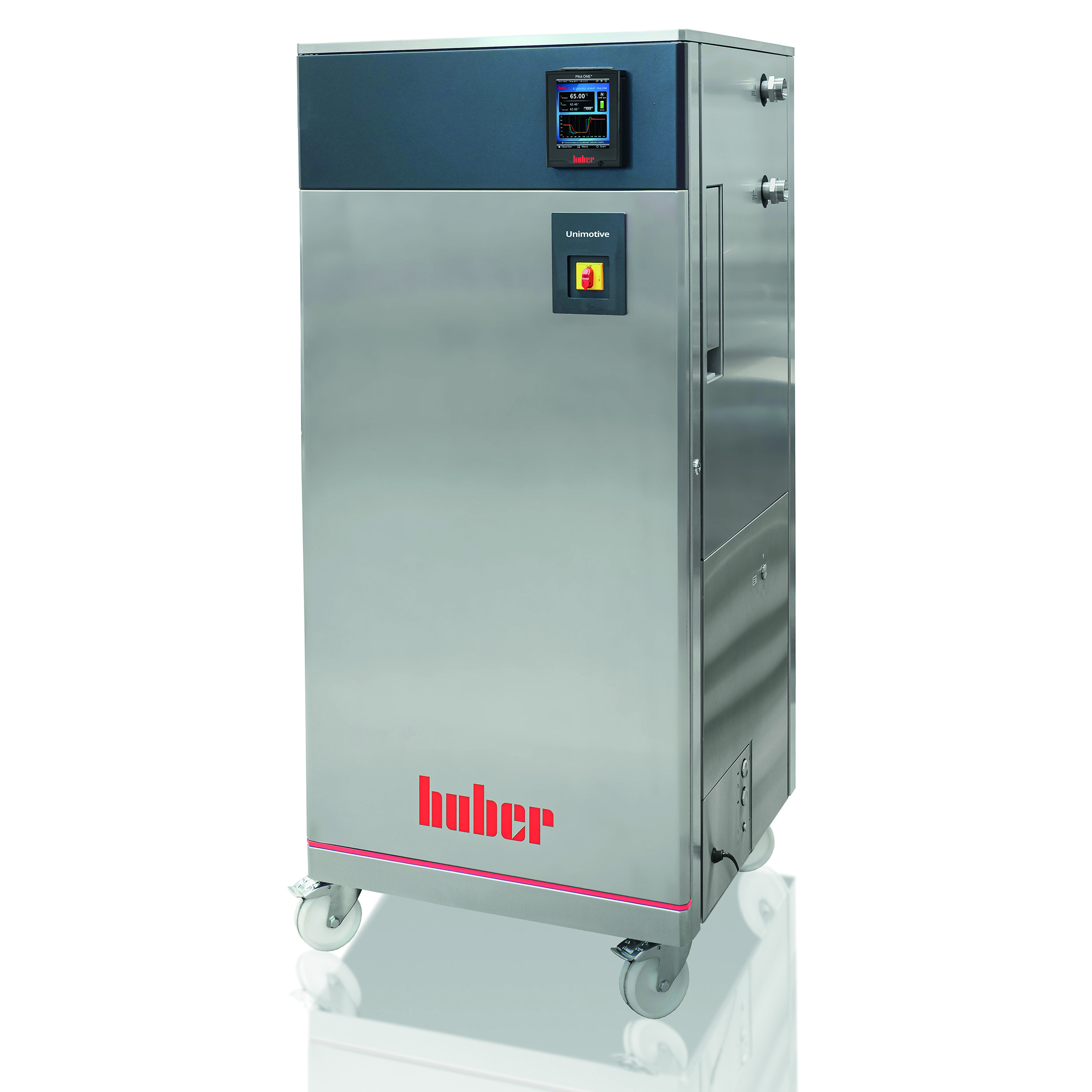
A key heat transfer fluid (HTF) in automotive applications is monoethylene glycol (MEG) mixed with water in varying ratios. At low temperatures this fluid becomes viscous. Peter Huber Kältemaschinenbau’s Unimotive range of temperature control units are specifically designed and built so that this increasing viscosity does not affect either the temperature control or the flow control. Testing encompasses safety evaluations including material flammability tests, stress and load analyses and temperature-dependent assessments. Huber’s temperature control systems, coupled with the accurate flow control of HTF, results in reliable and repeatable results. This not only enhances the overall quality and safety of automotive components but also ensures precise engineering outcomes for manufacturers.
Leading the green way
The automotive sector is a leader in technological innovation and progress. The sector is driving ever-improving efficiencies and implementing green energy solutions. Sustainability and energy conservation have been at the core of engineering design and execution at Huber since the company started in 1968. The company’s dedication to sustainability is reflected in its use of natural refrigerants in all models, with options including refrigeration systems that use CO2 as a refrigerant with set-points as low as -45°C. Products are fabricated using high-quality, recyclable materials that promote longevity and reduce waste. It is attention to details like this that Huber believes sets it apart and demonstrates the company’s commitment to sustainable manufacturing.
CO2-based automotive temperature control technology
Its latest achievement in sustainable innovation, the Unimotive GL (Green Line) series, sets a new benchmark in environmentally friendly refrigeration, according to the company. Operating with CO2, this series provides a 100% eco-friendly alternative to systems using synthetic refrigerants. Designed specifically for automotive applications, the Unimotive GL series facilitates direct operation with water-glycol solutions, offering an extensive temperature range (in the XT variant) from -45°C to 150°C.
Attaining such an elevated temperature using water/MEG as an HTF is achieved by passively and safely pressurising the HTF circuit. In the event of a power failure, the pressure is safely lowered without the use of active components.
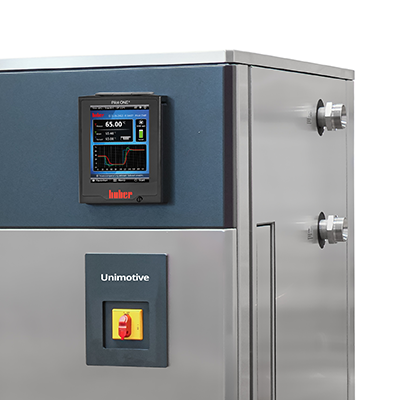
The series supports diverse applications, including temperature simulation tests, material durability evaluations and stress/load testing for functional automotive components. Since its adoption in the refrigeration field in the 19th century, CO2 has proven to be highly effective. With no ozone depletion potential (ODP = 0) and a minimal global warming potential (GWP = 1), it significantly reduces environmental impact. Additionally, CO2’s large-scale natural availability eliminates energy-intensive production processes. Its non-flammable, non-toxic and chemically inert properties make it an ideal choice for sustainable engineering solutions.
For the XT variant, with temperatures reaching up to 150°C, the carbon footprint remains minimal across the lifecycle – from production to operation and beyond.
Progress and sustainability
As automotive manufacturers integrate these eco-friendly systems, they contribute to both technological progress and environmental preservation. Huber’s principles of quality, performance, reliability and repeatability are coupled seamlessly with ecological responsibility — which Huber says is a testament to the brand’s enduring legacy and forward-thinking ethos. In summary, Huber’s eco-friendly temperature control technology goes beyond machinery and metrics. It is a catalyst for reshaping the automotive landscape sustainably.